Food
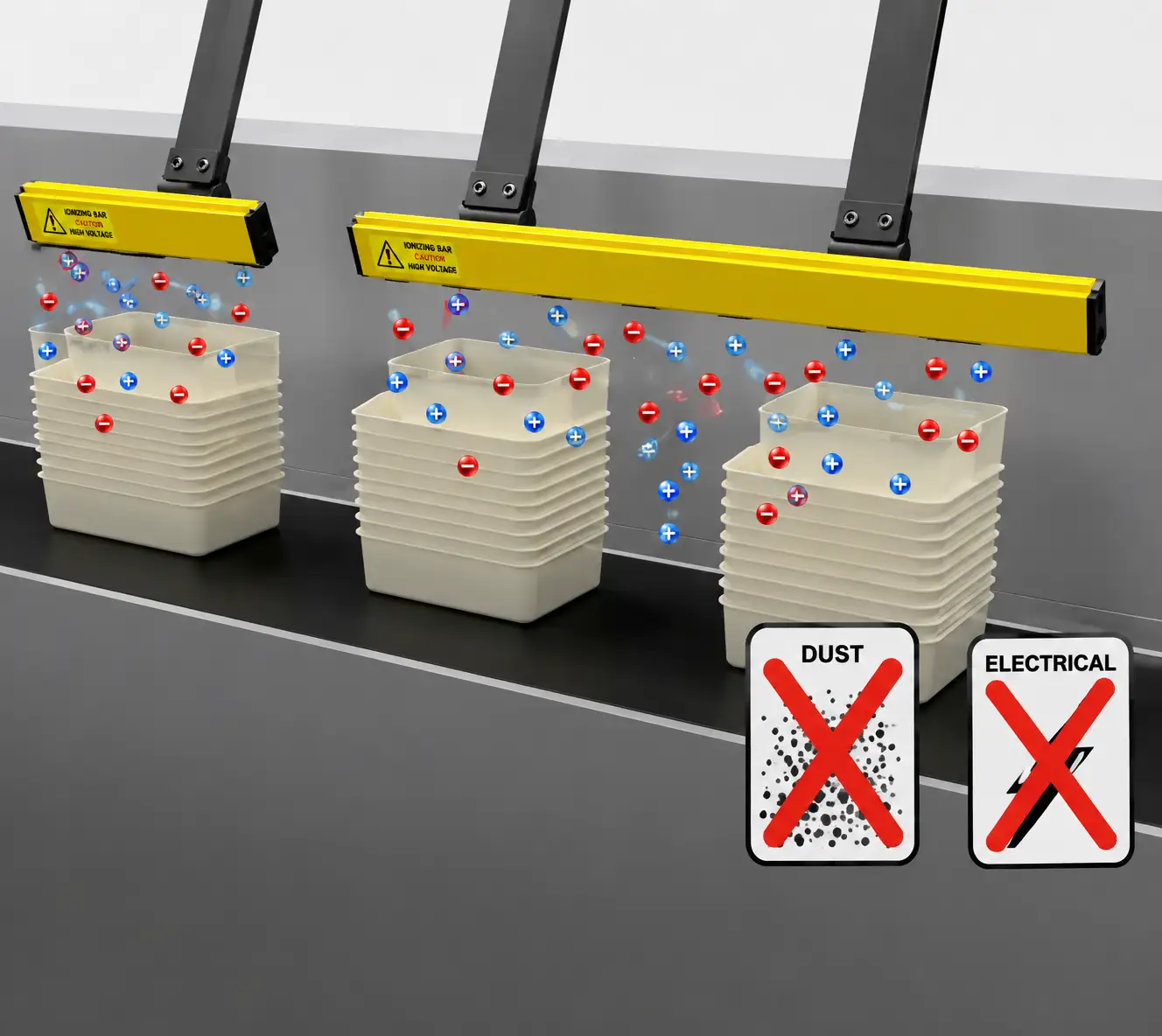
In Mould Labeling Application
The Problem: Plastic containers generate significant static charges during the molding, stacking, and unstacking (de-nesting) processes. As shown by the warning icons in the image, this high static charge acts like a magnet, attracting airborne dust and contaminants into the open containers before they can be filled. It also presents a painful electrical shock hazard to operators handling the stacks.
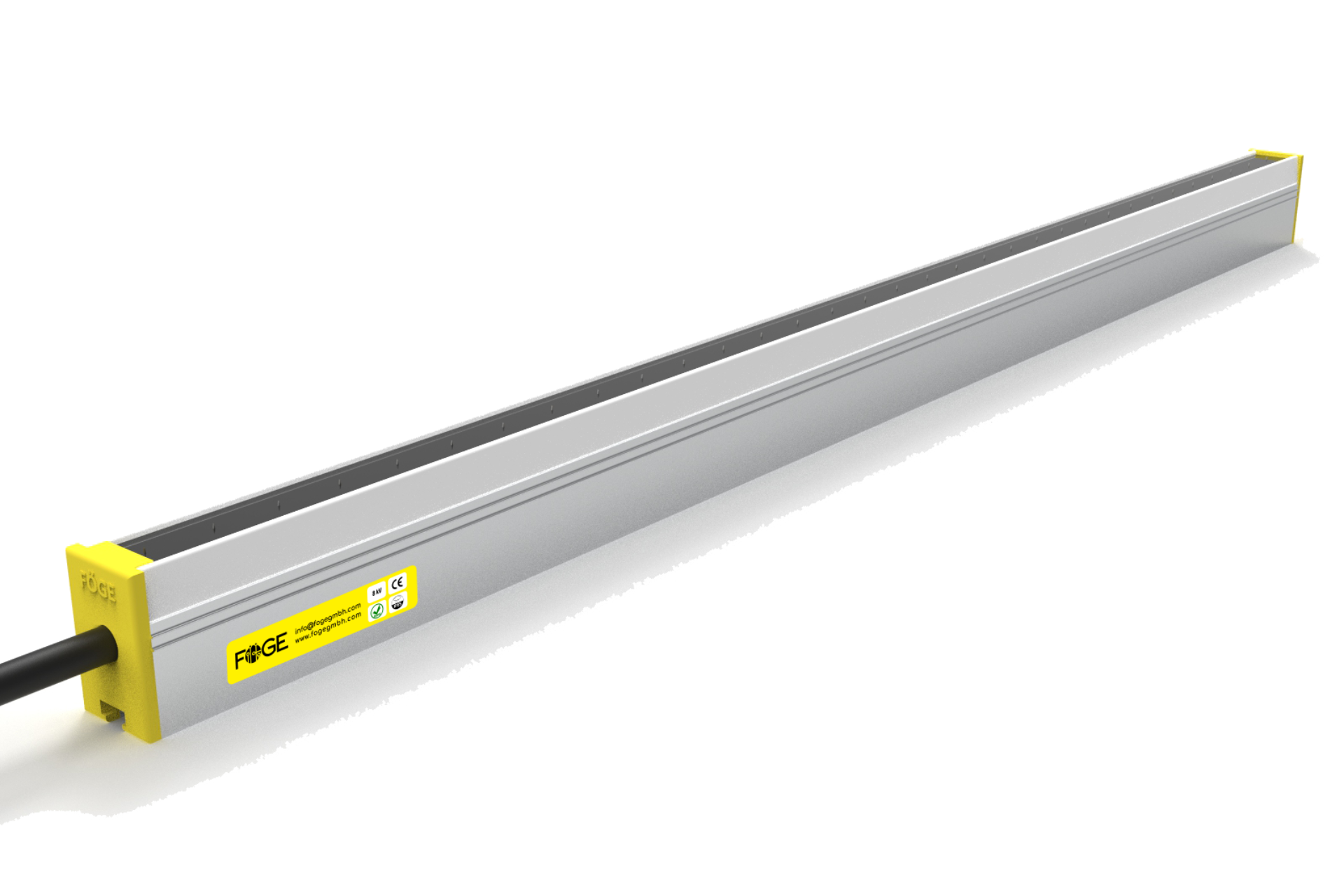
The Solution: Overhead active ionizing bars generate a continuous shower of positive and negative ions. This neutralizes the containers as they pass underneath, preventing dust attraction, releasing any existing dust (often combined with an air blower to remove it), and eliminating the shock hazard.
Application: Transporting, separating (de-nesting), or stacking empty plastic containers, tubs, or trays on a packaging or filling line.
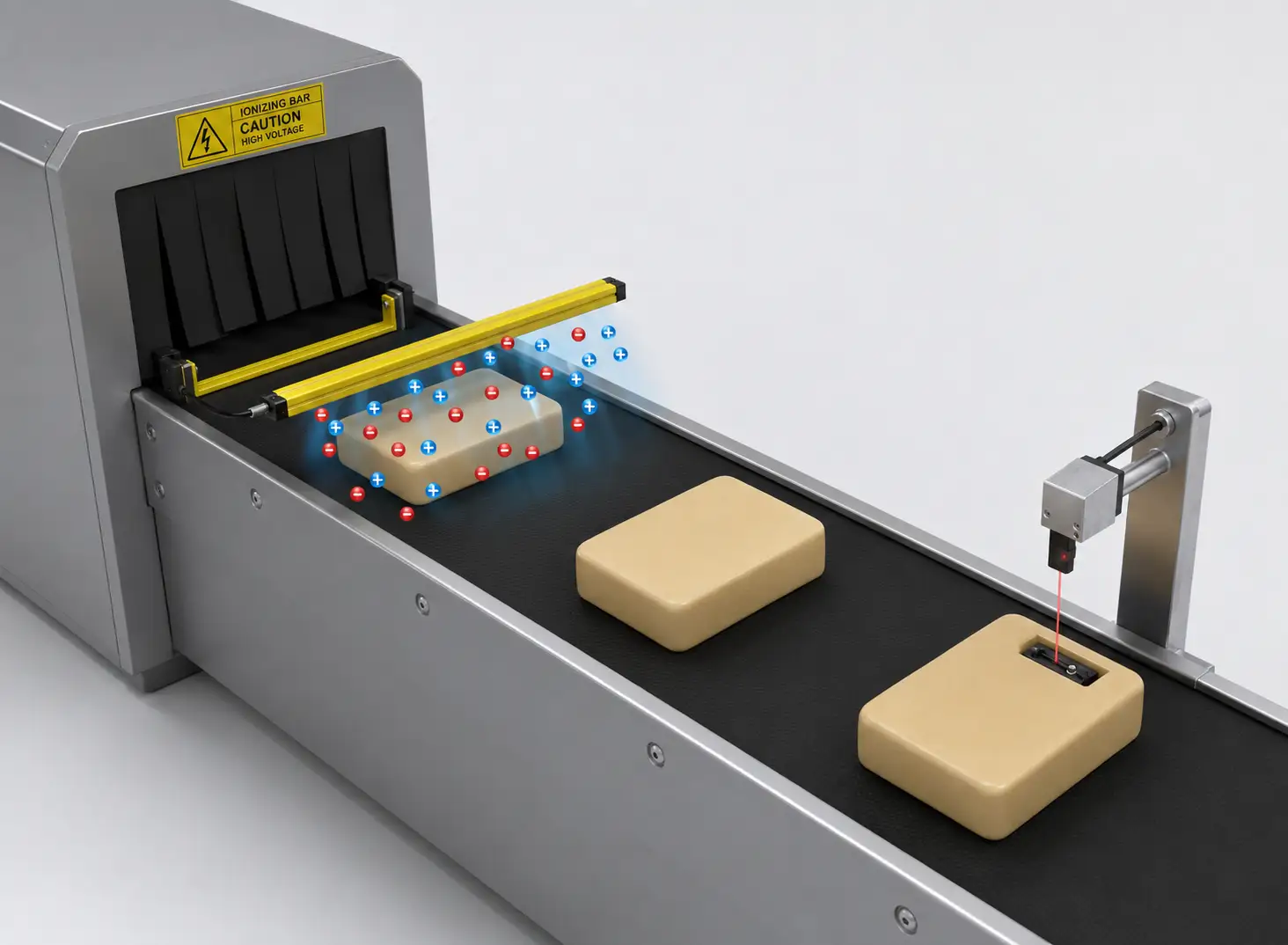
Inkjet Coding / Marking Conveyor Line
The Problem: Plastic parts or packaging often accumulate high static charges from previous manufacturing steps (like molding) or simply from friction as they move along the conveyor belt. When a charged object passes under an inkjet print head, the static field repels or scatters the microscopically small ink droplets. This causes "spider-webbing" (ink spray), blurry text, distorted barcodes, and ultimately, unreadable product codes.
The Solution: An active ionizing bar is mounted immediately upstream of the print head. It floods the surface of the product with a neutralizing ion cloud, eliminating the static field just before printing. This ensures the ink droplets travel in a straight, precise line to the target, resulting in sharp, high-quality prints.
Application: High-speed inkjet printing of barcodes, QR codes, expiration dates, or lot numbers onto individual products, lids, or packaging.

Foam Plate Extrusion & Thermoforming Line (Food Industry)
The Problem: In the production of expanded polystyrene (EPS) foam plates and food trays, the extrusion and winding of the foam sheet generate immense static charges. Foam is a near-perfect insulator, meaning it holds onto static stubbornly. This leads to several critical issues:
- Explosion Risk: If flammable blowing agents (like butane or pentane) are used in the foaming process, a single static spark can cause a catastrophic fire or explosion.
- Product Sticking: After the plates are stamped/thermoformed, they aggressively stick to the mold or to each other, making automatic stacking impossible.
- Contamination: The charged foam acts as a massive magnet for airborne dust, which is a major hygiene violation in food-grade packaging.
The Solution: A multi-point static control system is utilized. Long-distance ionizing bars are placed at the primary unwind and rewind stations to manage the bulk charge. For the thermoforming and stacking area, ionizing air blowers or targeted bars neutralize the individual plates as they are cut. This ensures the plates release cleanly from the mold, stack neatly without "nesting" issues, and remain 100% dust-free for food safety compliance.
Application: High-speed extrusion and forming of foam plates, egg cartons, meat trays, and take-away food containers.
Foam Sheet Extrusion (Winding & Storage Section
The Problem: During the extrusion of foam sheets (EPS/EPE), the material moves over several rollers and is wound into large rolls. Because foam is an exceptional insulator, it generates and retains massive static charges—often exceeding 100kV. This creates three severe problems:
- Fire & Explosion Hazard: In many foam processes, flammable blowing agents (like butane) are used. A static spark in the winding area can act as an ignition source, leading to high-risk industrial fires.
- Operator Safety: The enormous "battery effect" of the large foam roll can deliver high-energy shocks to anyone standing nearby, even without direct contact.
- Material Handling: The static charge causes the foam to cling to rollers or misalign during the winding process, leading to "telescoping" rolls or surface damage.
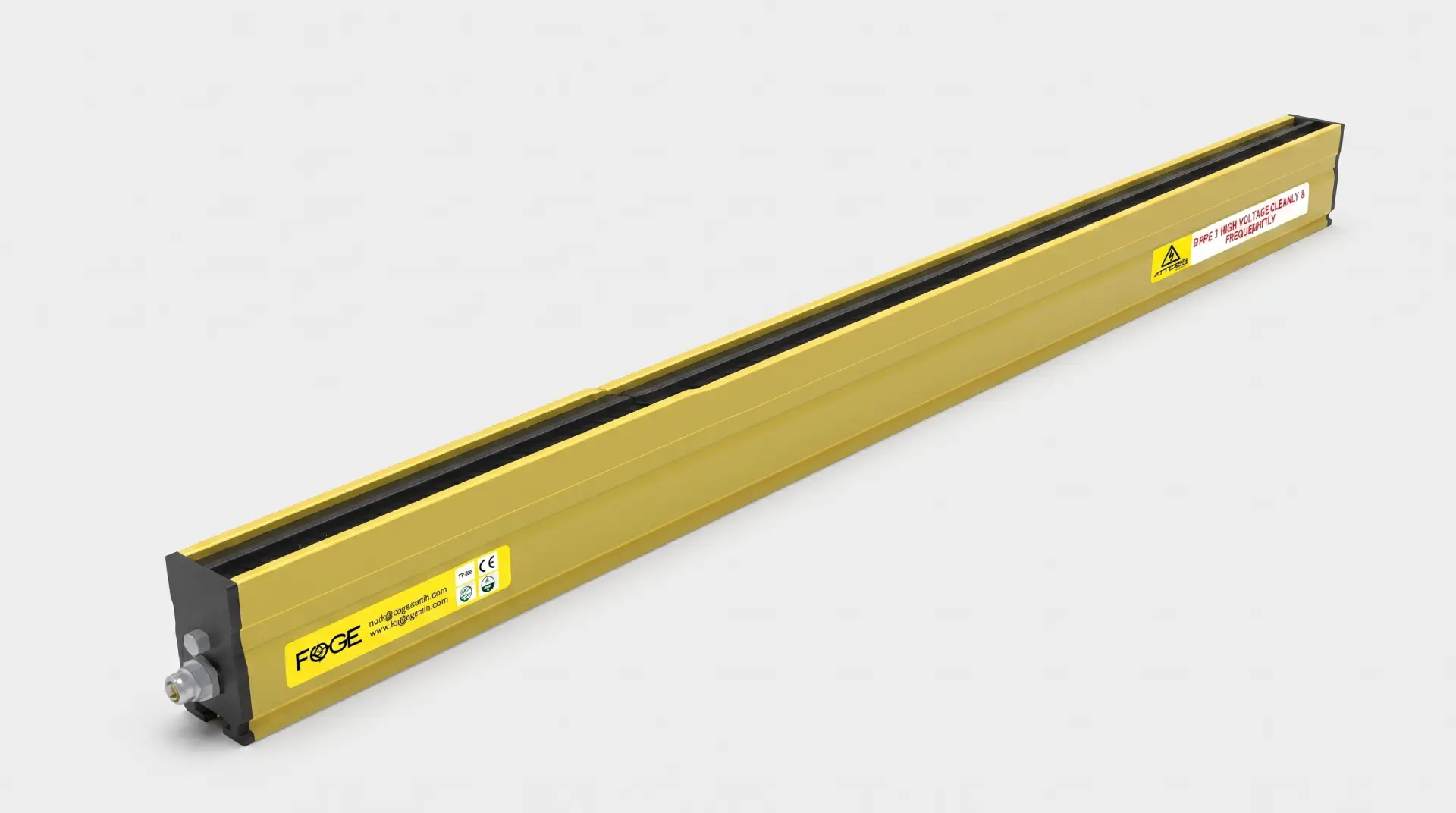
The Solution: A high-performance long-distance ionizing bar (or a series of bars) is mounted to monitor and neutralize the web as it travels toward the winder. This bar projects a dense cloud of ions that can neutralize the material from a distance, ensuring the charge is removed before the foam is tightly wound into a roll. This eliminates the risk of sparks, protects operators from shocks, and ensures a perfect, manageable roll.
Application: Winding continuous foam webs into finished rolls using a simplified, long-range static elimination setup.

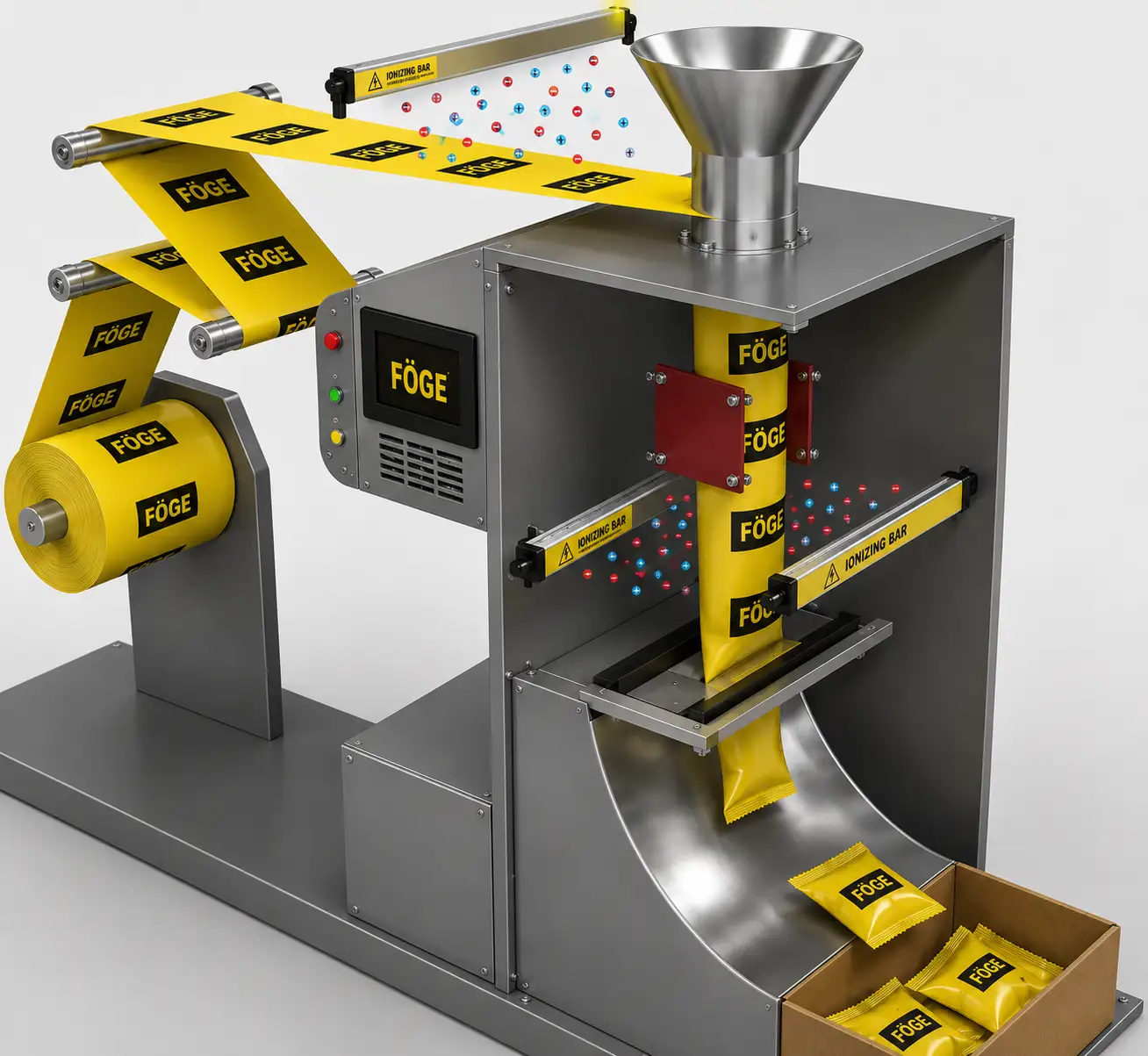
Vertical Form Fill Seal (VFFS) Machine / Vertical Bagging Machine
The Problem: As the plastic film web unwinds and travels over rollers, it generates a high triboelectric charge. This static creates two major production bottlenecks: First, the charged film can cling to the metal forming collar, causing misfeeds and jams. Second, and most critically, static on the inside of the formed tube causes dusty, powdery, or lightweight products to fly up and adhere to the film exactly where the sealing jaws need to close. This "seal contamination" results in weak seals, leaky bags, and rejected products.
The Solution: A multi-point static control approach is used. An ionizing bar neutralizes the flat web before it reaches the forming collar to ensure smooth feeding. Additional ionizing bars are strategically placed just below the sealing jaws to bathe the film tube in ions, neutralizing the static charge so the product drops cleanly to the bottom of the bag without clinging to the seal area.
Application: Automatically forming, filling (with loose solids, powders, or liquids), and sealing flexible packaging bags in high-speed production lines.
Injection Molding (Ejection and Mold Protection)
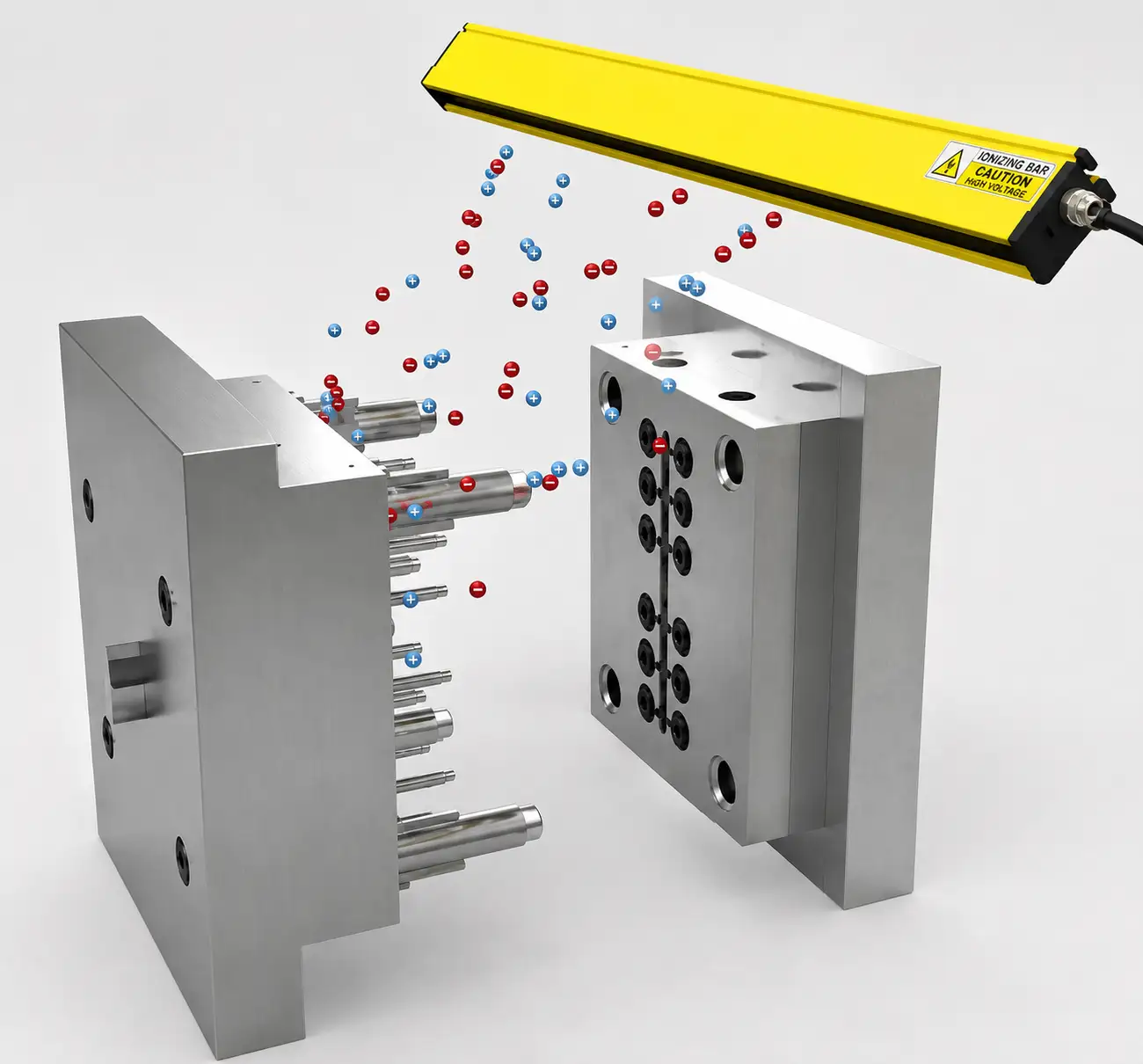
The Problem: High-speed injection molding of precision parts—whether for medical devices, pharmaceutical packaging, or chemical-resistant labware—creates intense friction and heat. This leads to massive static buildup on both the plastic part and the metallic mold surfaces. The resulting electrostatic attraction causes parts to stick to the mold cavity or core instead of ejecting cleanly. When the mold cycles for the next shot with a stuck part still inside, it causes severe mechanical damage to the expensive mold faces, creates crushed "short shots," and results in costly machine downtime.
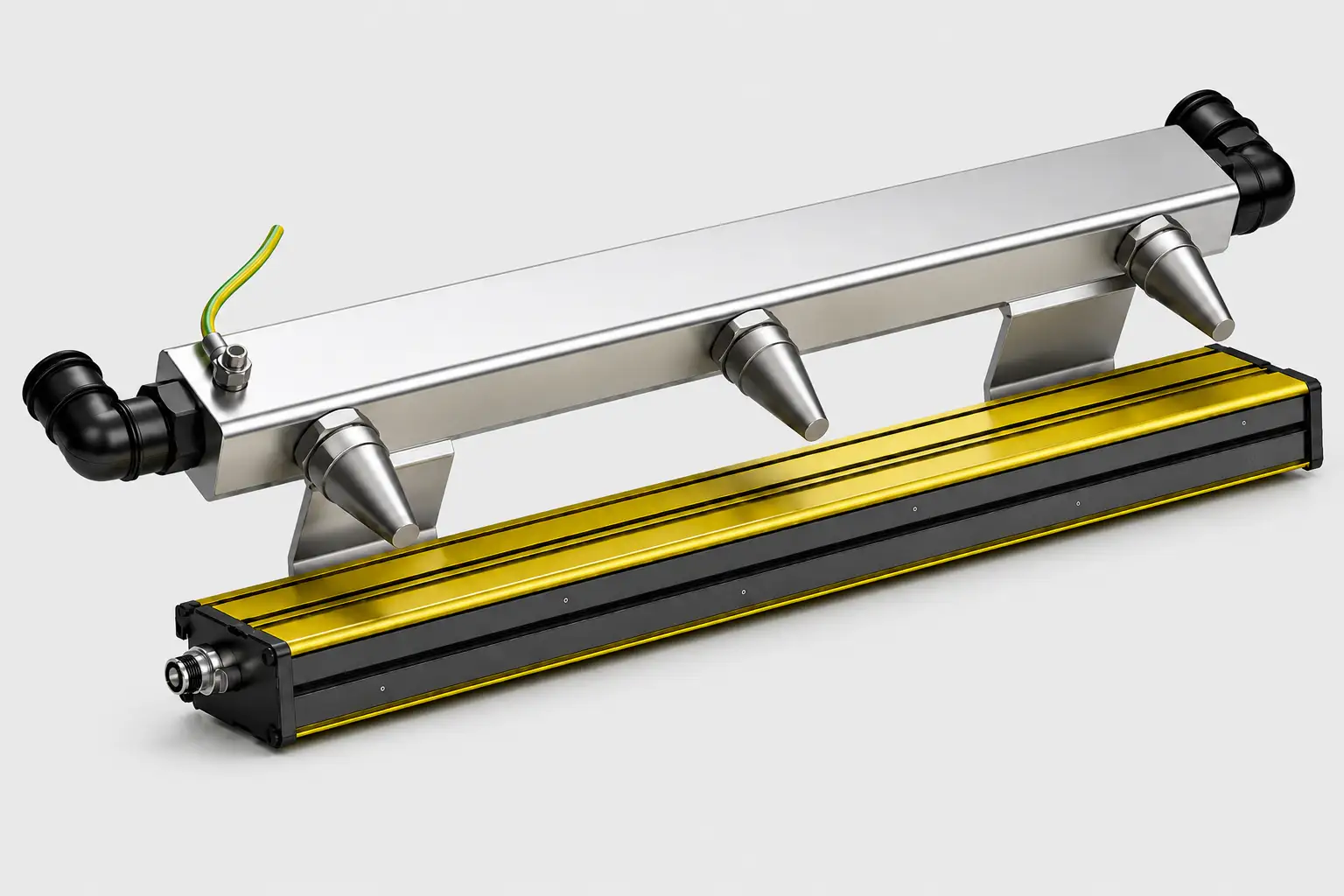
The Solution: High-output ionizing air blowers or specialized ionizing nozzles are positioned to target the open mold face during the ejection cycle. By flooding the mold cavity with a balanced stream of positive and negative ions, the static bond is instantly neutralized. This allows the parts to release effortlessly and fall away cleanly, ensuring the mold is clear for the next cycle and preventing any physical damage to the tooling.
Application: Automatic part release and mold protection for high-volume injection molding of plastic components, chemical containers, medical syringes, and pharmaceutical vials.