Plastics
Injection Molding (Ejection and Mold Protection)
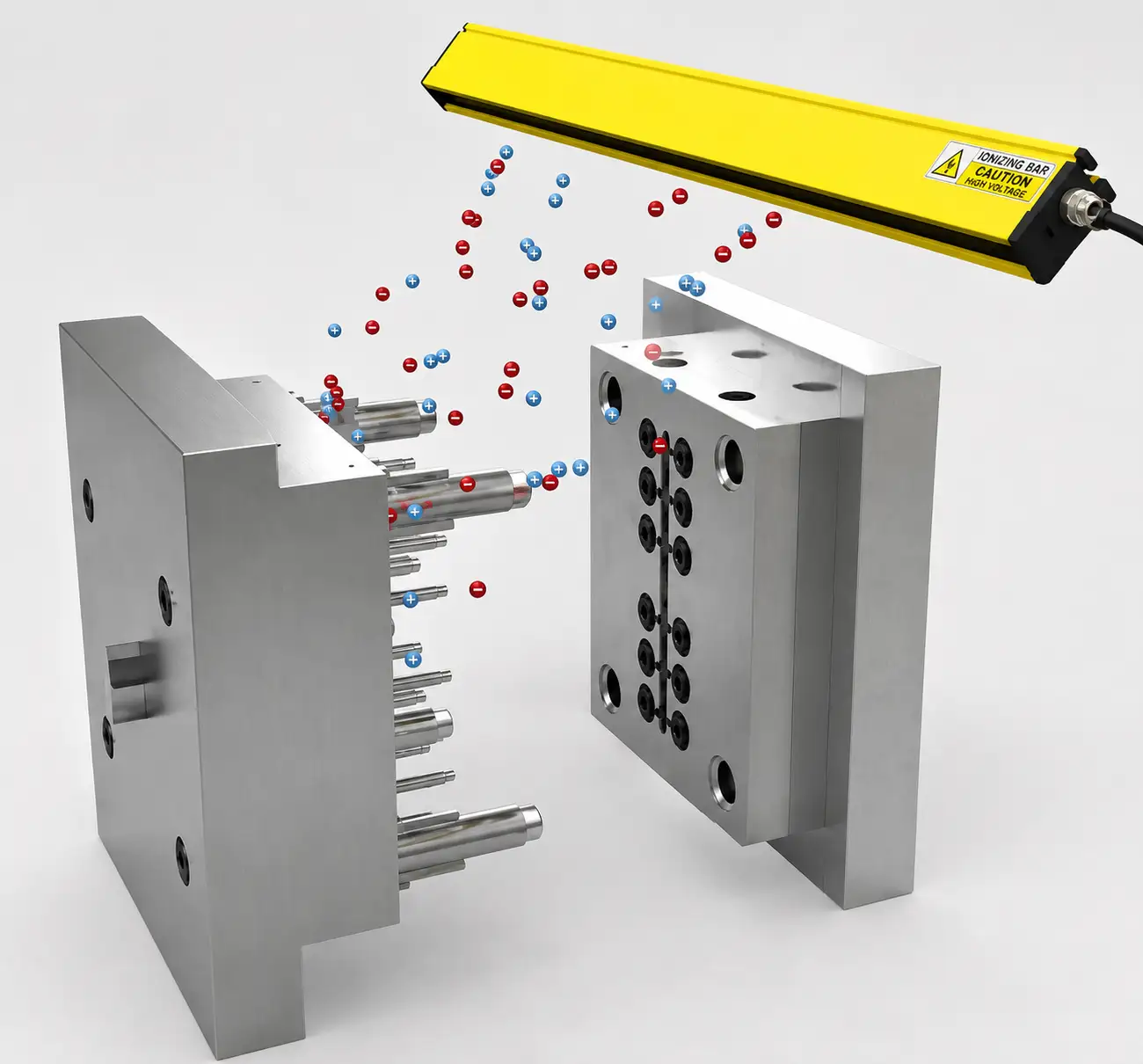
The Problem: High-speed injection molding of precision parts—whether for medical devices, pharmaceutical packaging, or chemical-resistant labware—creates intense friction and heat. This leads to massive static buildup on both the plastic part and the metallic mold surfaces. The resulting electrostatic attraction causes parts to stick to the mold cavity or core instead of ejecting cleanly. When the mold cycles for the next shot with a stuck part still inside, it causes severe mechanical damage to the expensive mold faces, creates crushed "short shots," and results in costly machine downtime.
The Solution: High-output ionizing air blowers or specialized ionizing nozzles are positioned to target the open mold face during the ejection cycle. By flooding the mold cavity with a balanced stream of positive and negative ions, the static bond is instantly neutralized. This allows the parts to release effortlessly and fall away cleanly, ensuring the mold is clear for the next cycle and preventing any physical damage to the tooling.
Application: Automatic part release and mold protection for high-volume injection molding of plastic components, chemical containers, medical syringes, and pharmaceutical vials.
Medical Injection Molding (Collection & Sorting)
The Problem: As medical-grade plastic parts are ejected from the mold and slide down collection chutes into bins, the intense friction generates high levels of static electricity. This creates three critical issues:
- Contamination: The charged parts act as "magnets" for airborne dust and fibers, which is unacceptable in sterile medical environments.
- Handling Issues: Parts cling to the metal chutes or stick to each other in the bins, preventing automated counting or sorting.
- Operator Safety: Operators touching the collection bins or the parts themselves receive painful electrostatic shocks throughout the day.
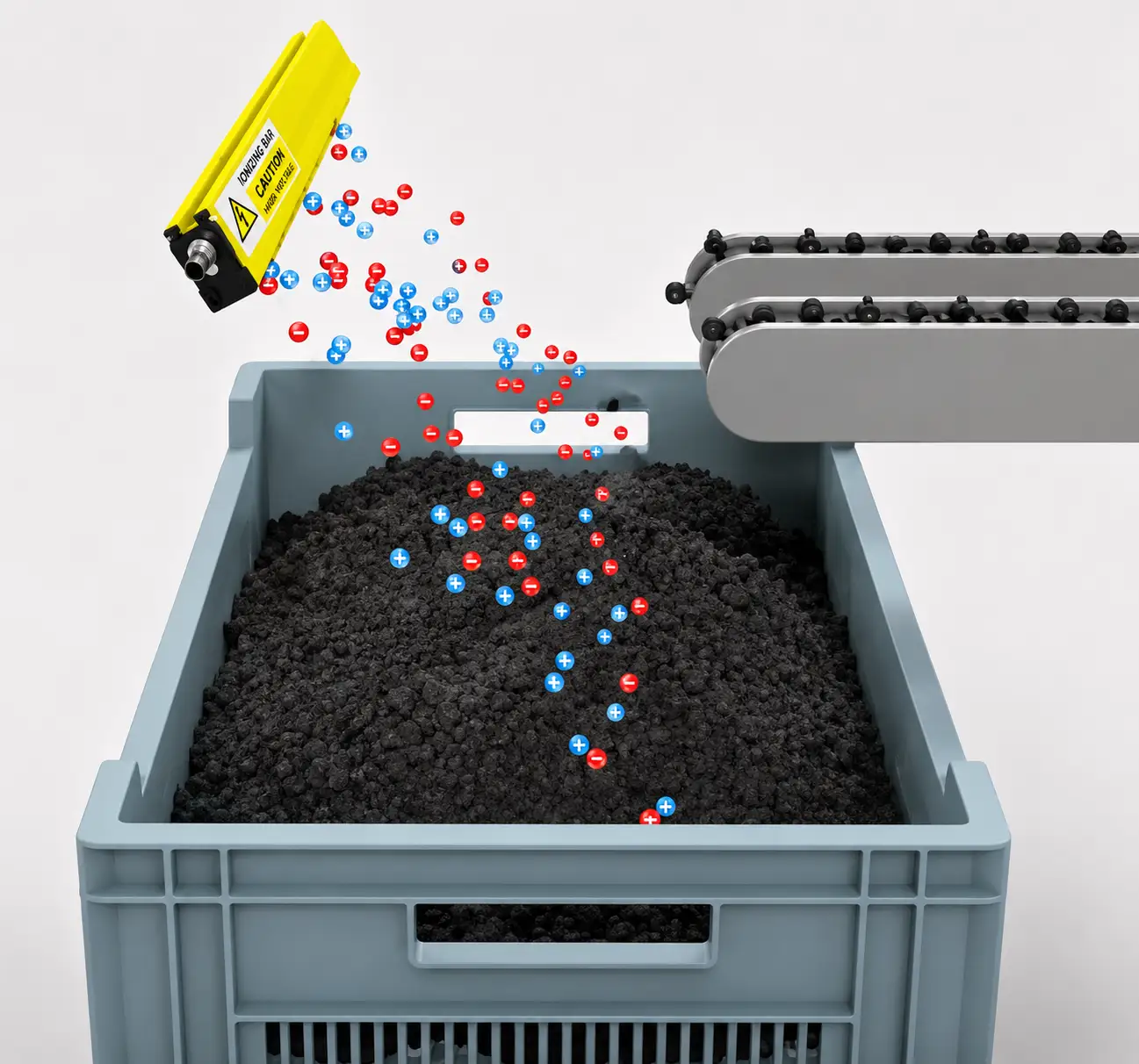
The Solution: An active ionizing bar is mounted directly over the conveyor or discharge chute. By flooding the parts with a balanced stream of positive and negative ions as they exit the machine, the static charge is neutralized instantly. This ensures the parts fall cleanly into the bins, remain free of dust, and are safe for operators to handle without the risk of shocks.
Application: Cleanroom injection molding for medical components such as petri dishes, syringe barrels, test tubes, and IV connectors.

In Mould Labeling Application
The Problem: Plastic containers generate significant static charges during the molding, stacking, and unstacking (de-nesting) processes. As shown by the warning icons in the image, this high static charge acts like a magnet, attracting airborne dust and contaminants into the open containers before they can be filled. It also presents a painful electrical shock hazard to operators handling the stacks.
The Solution: Overhead active ionizing bars generate a continuous shower of positive and negative ions. This neutralizes the containers as they pass underneath, preventing dust attraction, releasing any existing dust (often combined with an air blower to remove it), and eliminating the shock hazard.
Application: Transporting, separating (de-nesting), or stacking empty plastic containers, tubs, or trays on a packaging or filling line.
Stretch Blow Molding (SBM) / Injection Blow Molding
The Problem: In blow molding—frequently used in the plastics industry to produce bottles and containers—the "parison" or "preform" (the raw plastic material) is heated and moved into the mold. High static charges cause these preforms to move, swing, or misalign as they are transferred. If the raw material is not perfectly aligned when the heavy metal mold halves close, it results in a "crushed" or defective product. Worse, this misalignment can cause the mold to close onto the solid plastic, leading to catastrophic physical damage to the expensive mold faces and core pins.
The Solution: Targeted ionizing air nozzles or specialized ionizing bars are installed at the preform loading station. By neutralizing the static charge on the raw material immediately before it enters the mold, the electrostatic forces that cause movement are eliminated. This ensures the preforms stay perfectly oriented and stationary as the mold closes, preventing product defects and protecting the machinery from collision damage.
Application: Ensuring precise alignment and mold protection during the high-speed production of plastic bottles, containers, and chemical carboys.