


Automotive
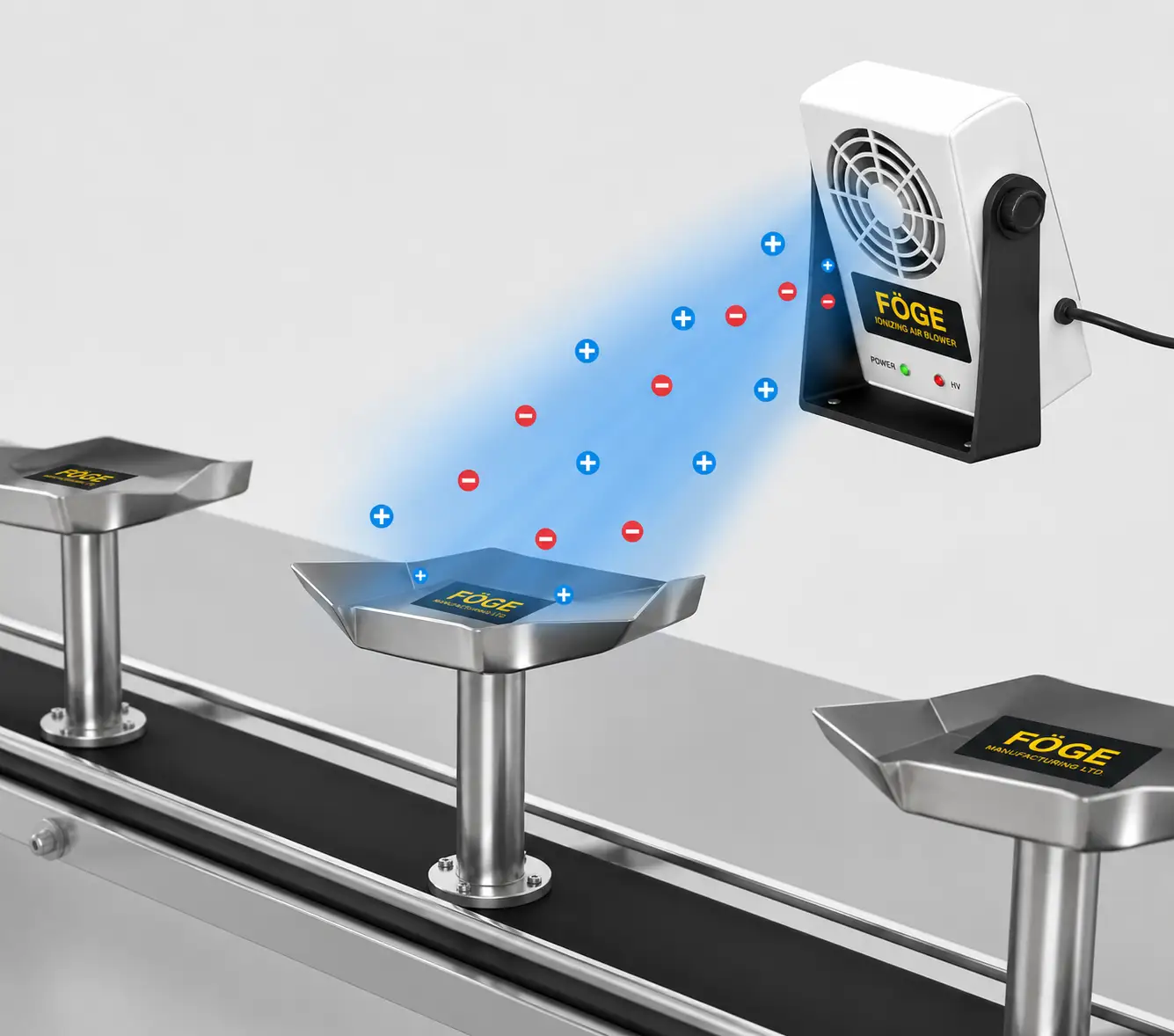
Assembly and handling of electronic components for vehicle headlights
The Problem: Modern headlights integrate complex and delicate electronic driver circuits for LEDs, precise leveling and aiming motors, and sensitive sensors, all of which are highly susceptible to Electrostatic Discharge (ESD). Friction from handling plastic components, machine operation, and movement of partially assembled units during manufacturing can easily build up large static charges on parts, tools, and operators. Even a small ESD event, too small to be felt, can permanently damage or degrade these sensitive components, leading to headlight failure, malfunctions (such as incorrect aiming), and significant warranty costs.
The Solution: Integrated static control is crucial throughout the headlight manufacturing and assembly process. Extensive measures are implemented, including: widespread grounding of workstations, equipment, and personnel (via wrist straps, static dissipative flooring/mats); strategic placement of ionizing devices, such as localized ionizing air blowers over delicate electronic component handling areas and overhead ionizing bars across workstations, to neutralize charges on plastic parts, operators, and tools; and specific ESD-safe packaging and handling procedures for sensitive electronic modules.
Application: Ensuring the functionality and reliability of automotive headlight assemblies by controlling static electricity throughout the component handling and assembly stages in a manufacturing environment.
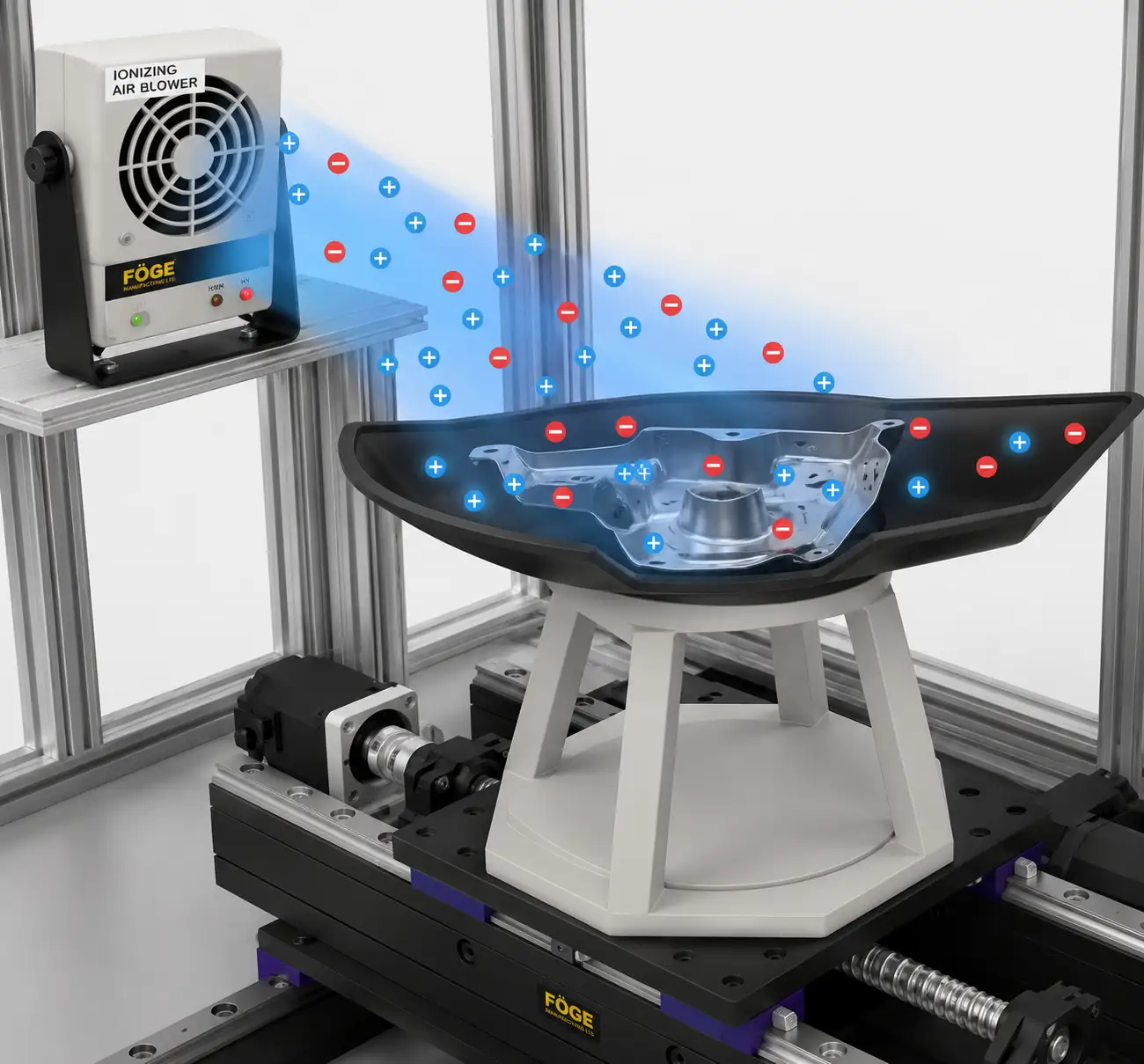
Automated Headlight Assembly / Coating Preparation Station
The Problem: Clear polycarbonate automotive headlight lenses generate high static electricity during molding and handling. This static strongly attracts airborne dust and contaminants. If dust settles on the interior or exterior of the lens before hard-coating (anti-scratch), anti-fog coating, or final unit sealing, it causes permanent visual defects, rejected parts, and impaired light distribution.
The Solution: Multiple ionizing blowers are positioned within the enclosed workstation to flood the complex 3D shape of the headlight lens with a high-volume stream of positive and negative ions. This completely neutralizes the surface charge, breaking the electrostatic bond holding dust particles to the plastic and preventing any further contamination during the critical coating or sealing phase.
Application: Neutralizing static charge and preventing dust attraction on 3D molded automotive lighting components (lenses and housings) immediately prior to protective coating application or final assembly.
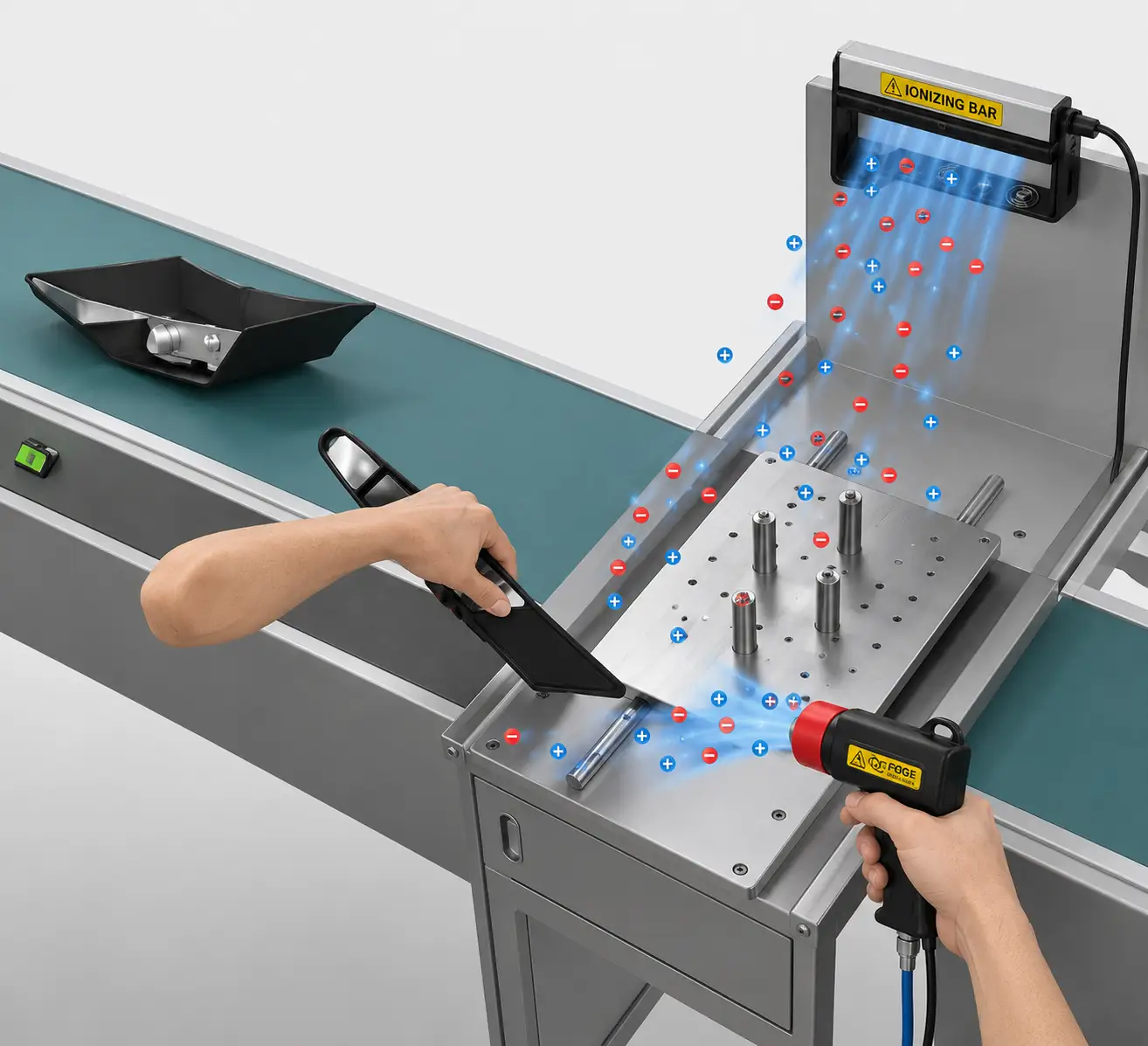
Manual Cleaning and Assembly Station (Automotive Headlight Housing)
The Problem: Injection-molded black plastic headlight housings carry a strong static charge from the molding process and conveyor transport. This static charge securely bonds dust, plastic shavings, and other debris to the surface. If these particles are not removed before the clear front lens is sealed onto the housing, the debris becomes permanently trapped inside, resulting in a rejected product due to poor aesthetics or impaired light projection. Standard compressed air alone is often not enough to break this static bond.
The Solution: A dual static control approach is used at the workstation. An overhead ionizing blower (top right) floods the assembly area with ions to create a static-free zone, preventing airborne dust from being attracted to the area. Simultaneously, the operator uses a handheld ionizing air gun. This tool combines high-pressure compressed air with a stream of positive and negative ions. The ions break the static bond holding the dust to the plastic, while the air physically blows the unbonded dust away, leaving a clean, neutralized part ready for final assembly.
Application: Manual precision cleaning and static neutralization of complex 3D molded plastic parts immediately prior to final sealing or sensitive assembly.
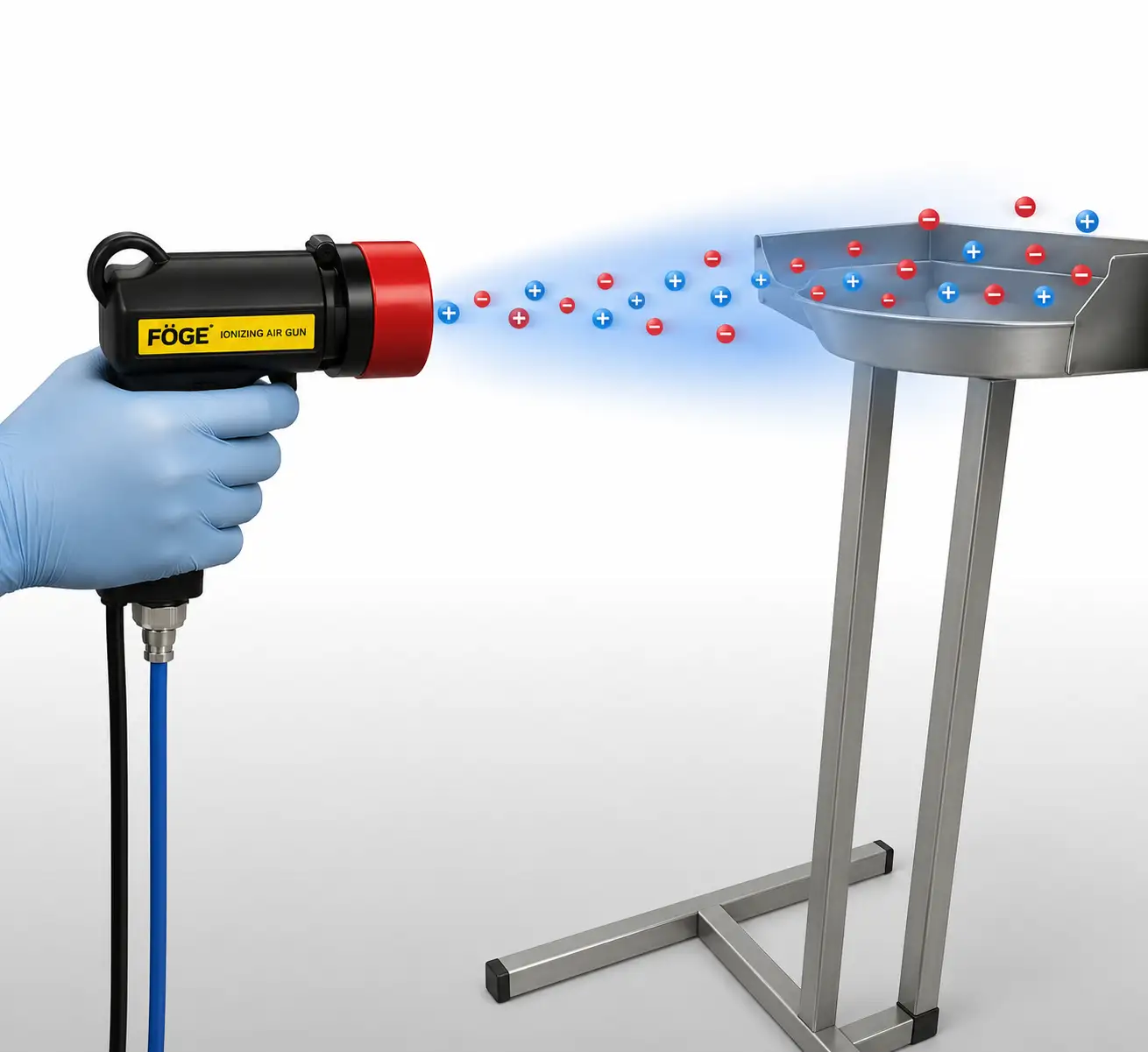
Manual Cleaning Station
The Problem: Complex 3D plastic parts, like automotive headlight housings, accumulate strong static charges from molding and handling. This static acts like a magnet, tightly binding dust, dirt, and manufacturing debris to the surface. Blowing standard compressed air is ineffective because the static charge remains and immediately re-attracts the airborne dust back onto the part.
The Solution: The operator uses a handheld ionizing air gun. This device combines high-pressure compressed air with a dense stream of neutralizing ions (represented by the red and blue spheres). The ions instantly break the electrostatic bond between the dust and the plastic surface, allowing the pressurized air to easily and permanently blow the contaminants away.
Application: Precision manual cleaning, dust removal, and static neutralization of 3D molded parts, sensitive electronics, or delicate assemblies right before coating, sealing, or final packaging.
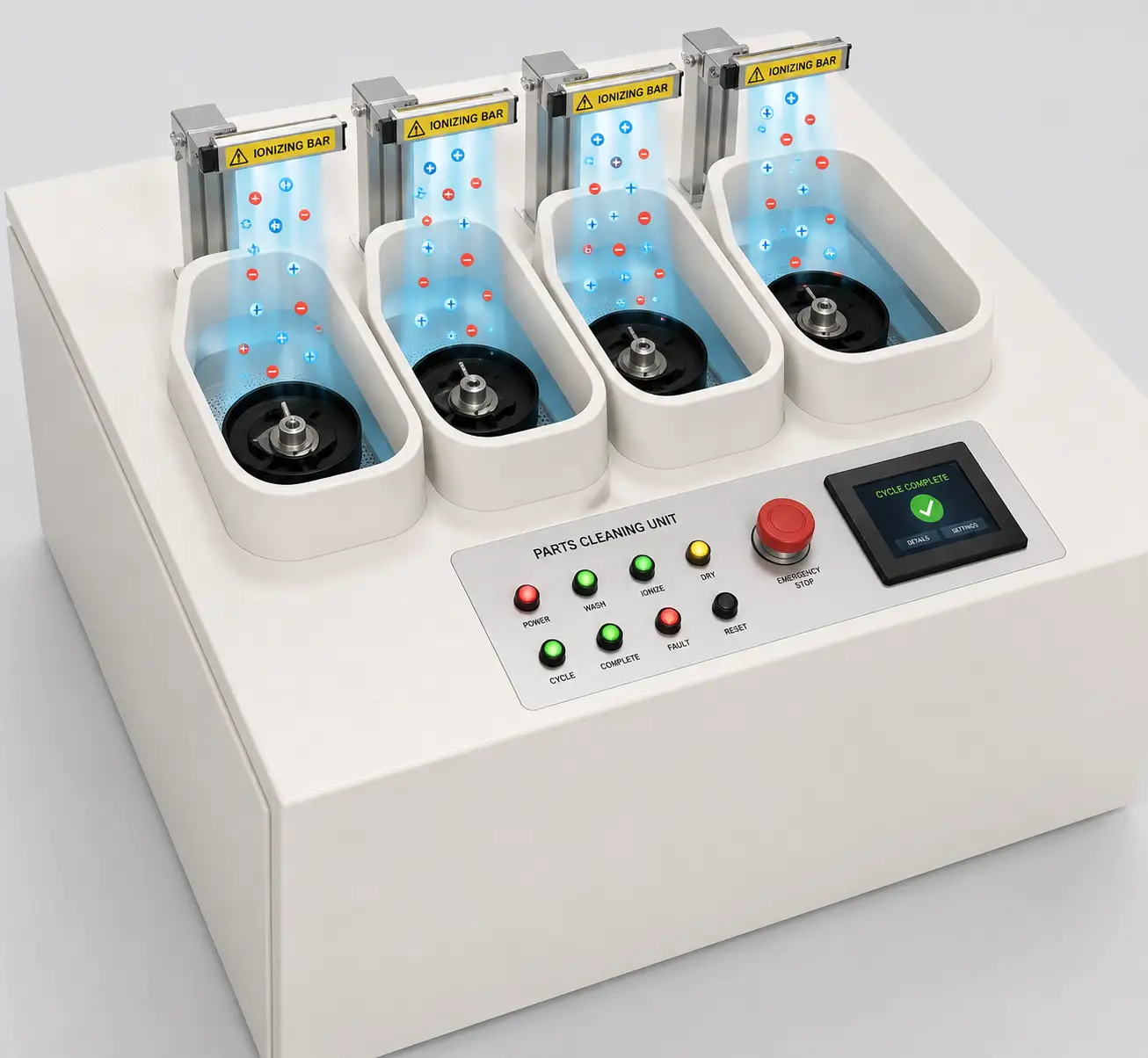
Precision Headlight Lens & Reflector Cleaning / Sub-Assembly
The Problem: The highly reflective interior surfaces and clear polycarbonate lenses of modern headlights generate strong static electricity. This static attracts and tightly bonds airborne dust, dirt, and manufacturing debris to the surfaces. If these particulates are not effectively removed before final bonding and sealing, they become trapped inside the unit, reducing optical performance, distorting light patterns, causing visible defects, and resulting in expensive quality failures and rejections.
The Solution: Integrated static control is employed throughout this assembly process. Multiple ionizing devices, such as localized ionizing air nozzles or blowers, are strategically placed over the assembly area and directed at the parts. These devices create a dense cloud of positive and negative ions, which instantly neutralizes the static charge on both the lens and reflector. This breaks the electrostatic bond holding any contamination, allowing clean dry air (potentially combined with a vortex action) to effectively remove particles and ensuring pristine, statically-neutralized surfaces prior to final assembly.
Application: Ensuring the performance and visual clarity of complex automotive headlight optical systems through meticulous static neutralization and precision contamination control during critical assembly stages.
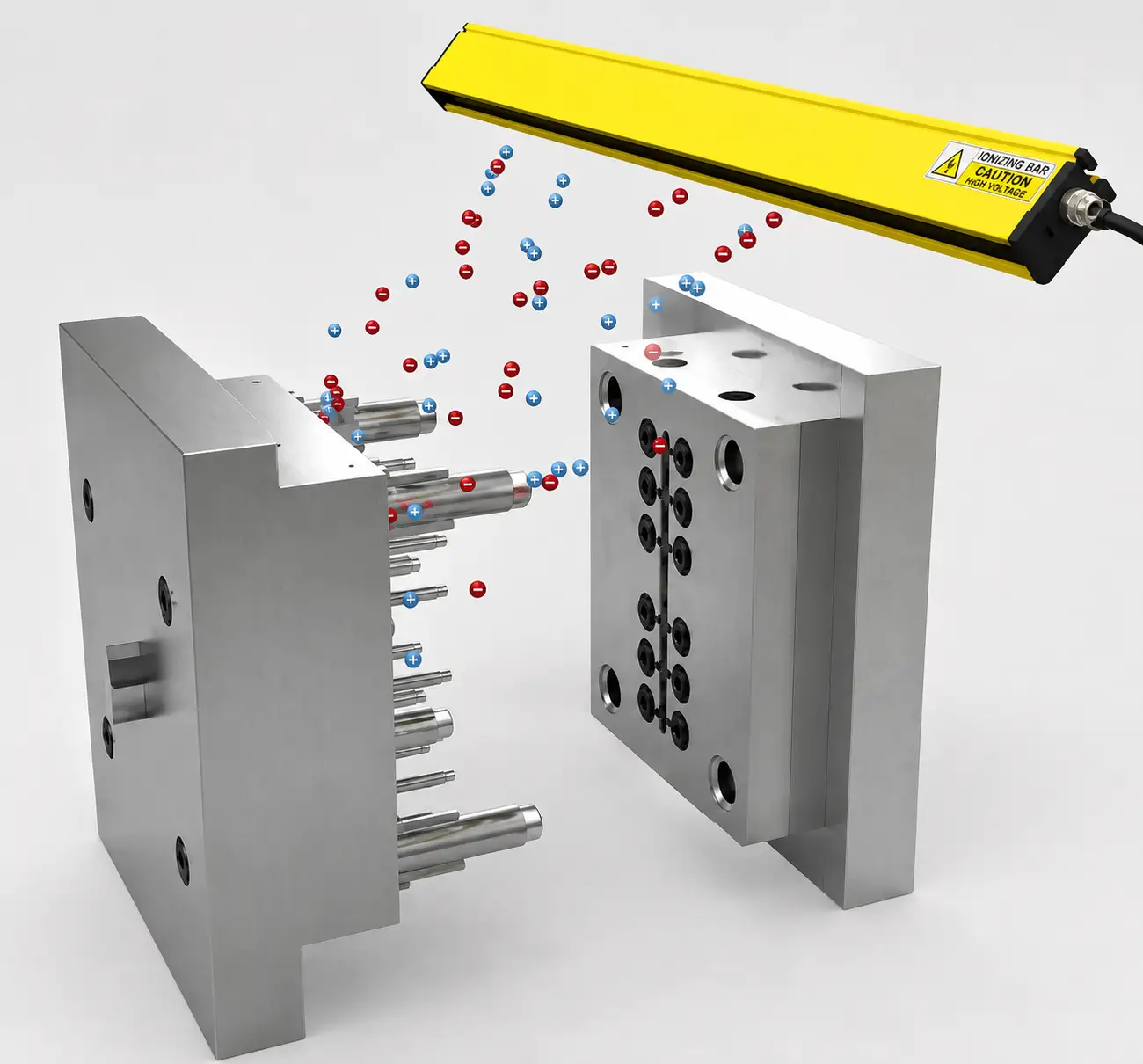
Injection Molding (Ejection and Mold Protection)
The Problem: High-speed injection molding of precision parts—whether for medical devices, pharmaceutical packaging, or chemical-resistant labware—creates intense friction and heat. This leads to massive static buildup on both the plastic part and the metallic mold surfaces. The resulting electrostatic attraction causes parts to stick to the mold cavity or core instead of ejecting cleanly. When the mold cycles for the next shot with a stuck part still inside, it causes severe mechanical damage to the expensive mold faces, creates crushed "short shots," and results in costly machine downtime.
The Solution: High-output ionizing air blowers or specialized ionizing nozzles are positioned to target the open mold face during the ejection cycle. By flooding the mold cavity with a balanced stream of positive and negative ions, the static bond is instantly neutralized. This allows the parts to release effortlessly and fall away cleanly, ensuring the mold is clear for the next cycle and preventing any physical damage to the tooling.
Application: Automatic part release and mold protection for high-volume injection molding of plastic components, chemical containers, medical syringes, and pharmaceutical vials.
Recommended products for this application
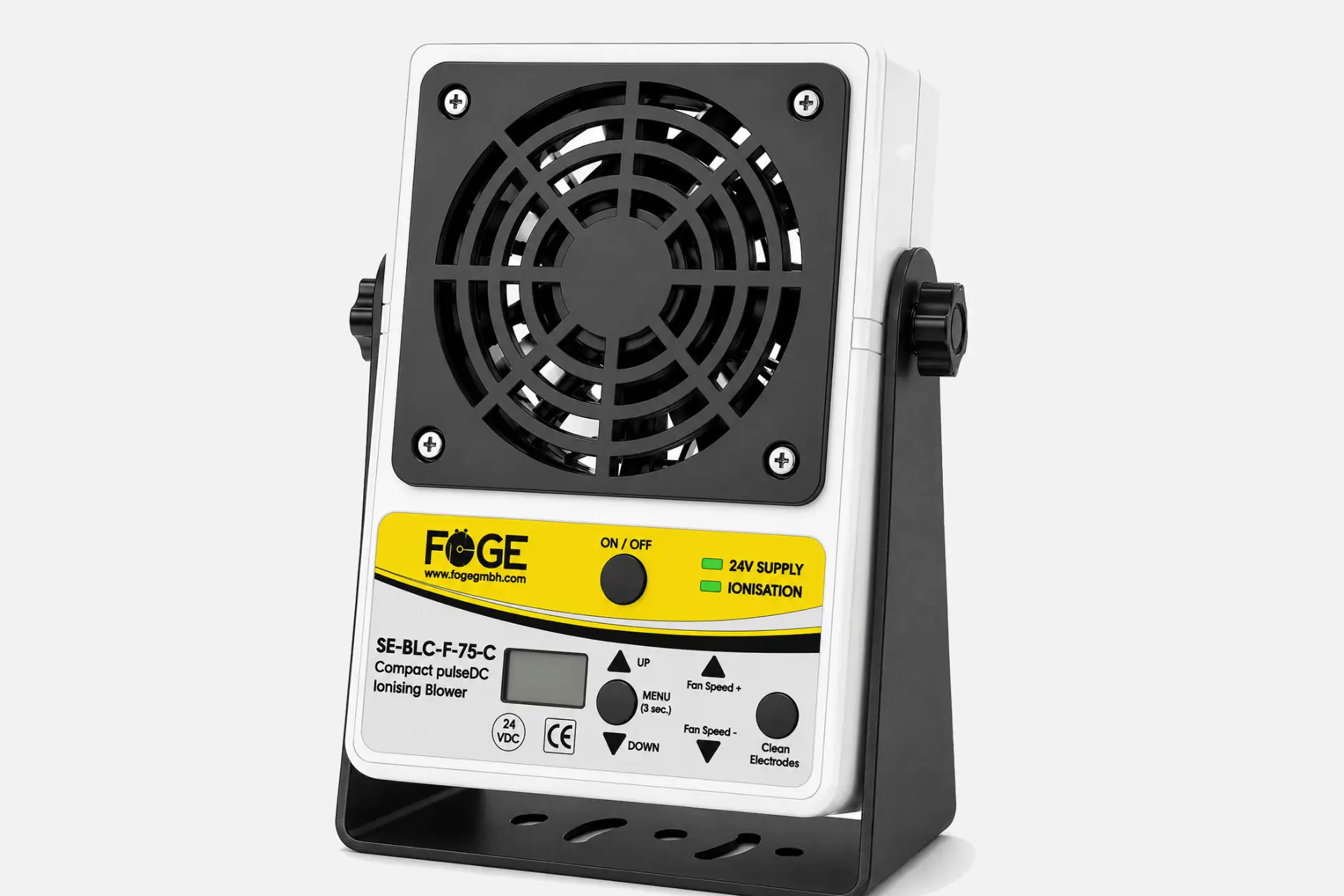
Ionization blowers and fans: For large-area coverage and neutralization of high air volumes.

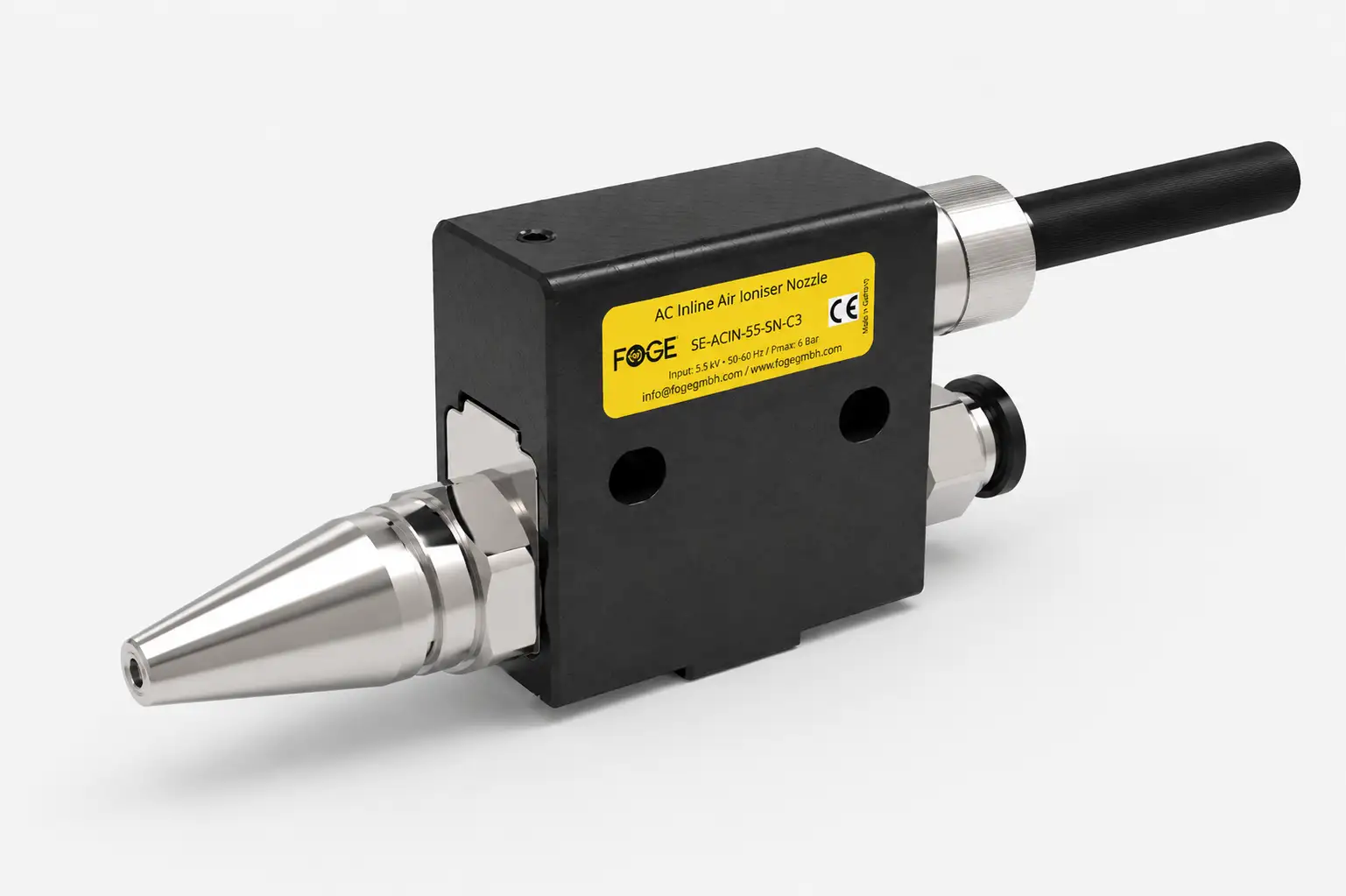
Ionizing nozzles


Ionizing Airguns:Eliminate dust as well as static electricity with high pressure ionized air.
