Pharmaceutical

ChatGPT Image Jun 24, 2026, 01_03_40 PM

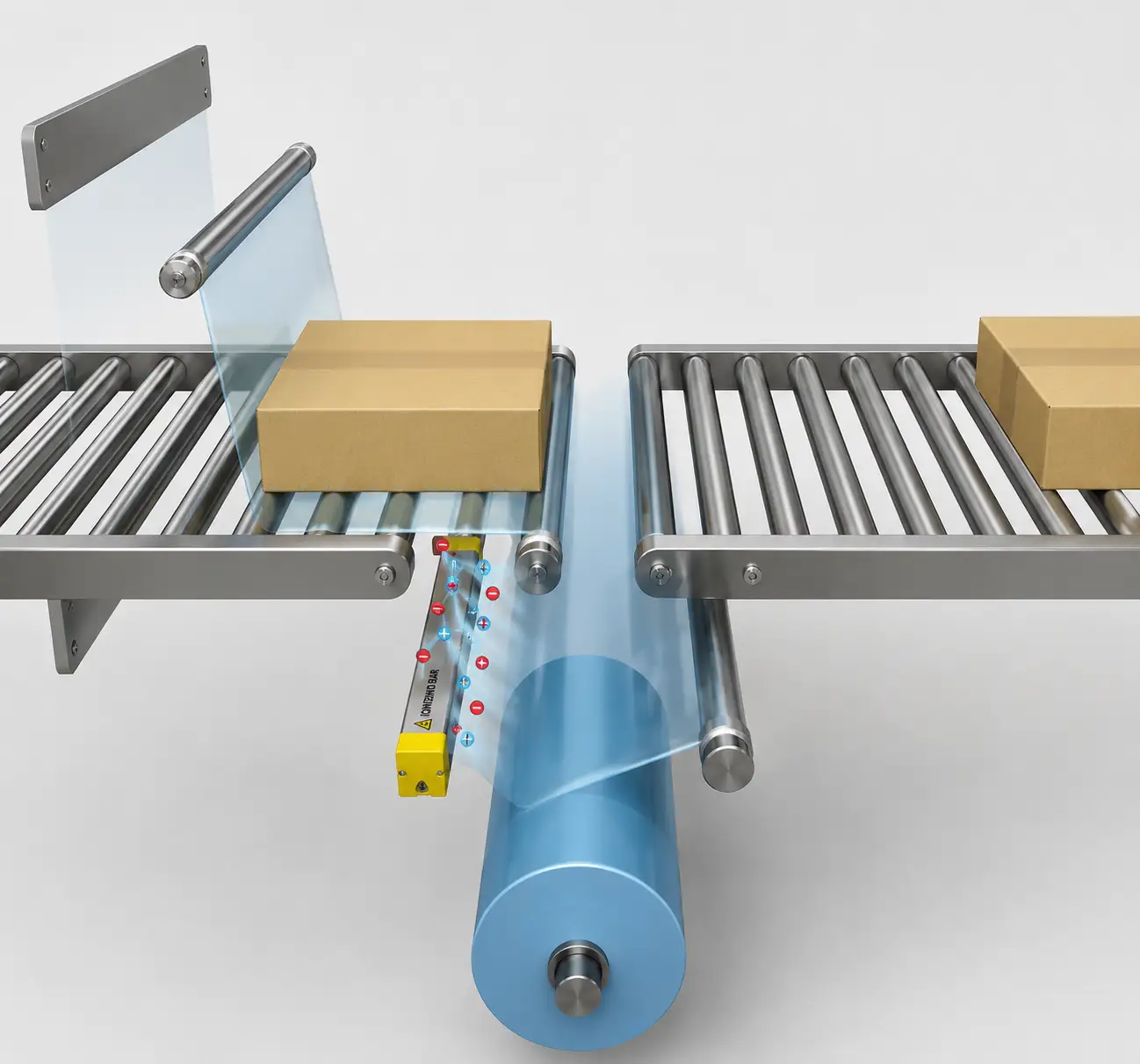
Sleeve Wrapper / Shrink Bundling Machine

The Problem: As the continuous web of plastic shrink film unwinds and feeds upward through the machine gap, it generates static electricity. This static charge causes the lightweight film to wrap around machine rollers, cling to itself, or feed unevenly, resulting in machine jams and poorly wrapped products.

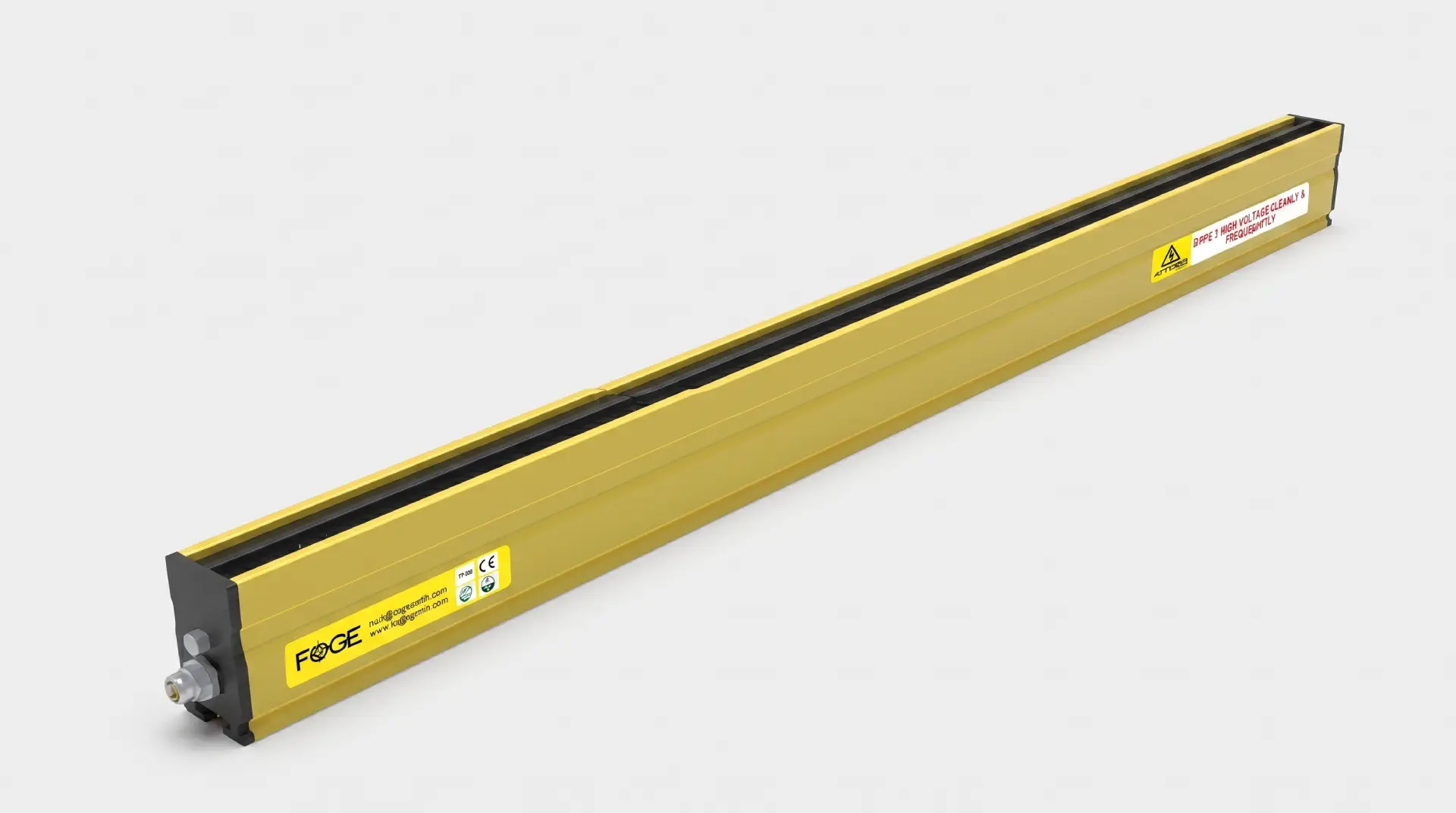
The Solution: An active ionizing bar is positioned right next to the film web just before it meets the product box. It neutralizes the static charge, allowing the film to feed smoothly and drape accurately around the product without clinging to the machinery.

Application: Automatically wrapping individual boxes, trays, or bundled products in plastic film (often before they pass through a heat shrink tunnel).

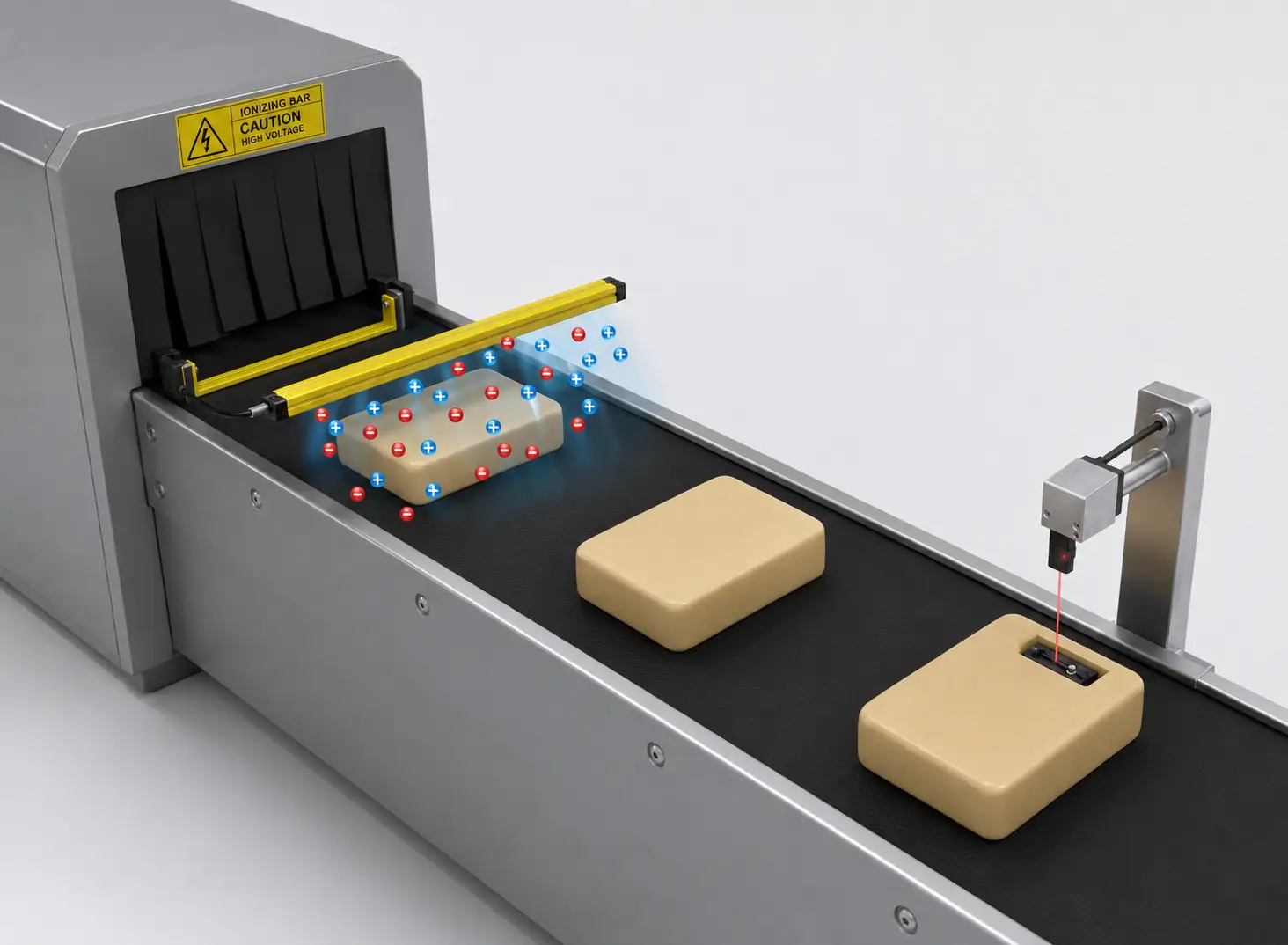
Inkjet Coding / Marking Conveyor Line

The Problem: Plastic parts or packaging often accumulate high static charges from previous manufacturing steps (like molding) or simply from friction as they move along the conveyor belt. When a charged object passes under an inkjet print head, the static field repels or scatters the microscopically small ink droplets. This causes "spider-webbing" (ink spray), blurry text, distorted barcodes, and ultimately, unreadable product codes.

The Solution: An active ionizing bar is mounted immediately upstream of the print head. It floods the surface of the product with a neutralizing ion cloud, eliminating the static field just before printing. This ensures the ink droplets travel in a straight, precise line to the target, resulting in sharp, high-quality prints.

Application: High-speed inkjet printing of barcodes, QR codes, expiration dates, or lot numbers onto individual products, lids, or packaging.

ChatGPT Image Jun 24, 2026, 01_00_38 PM
ChatGPT Image Jun 24, 2026, 12_28_15 PM

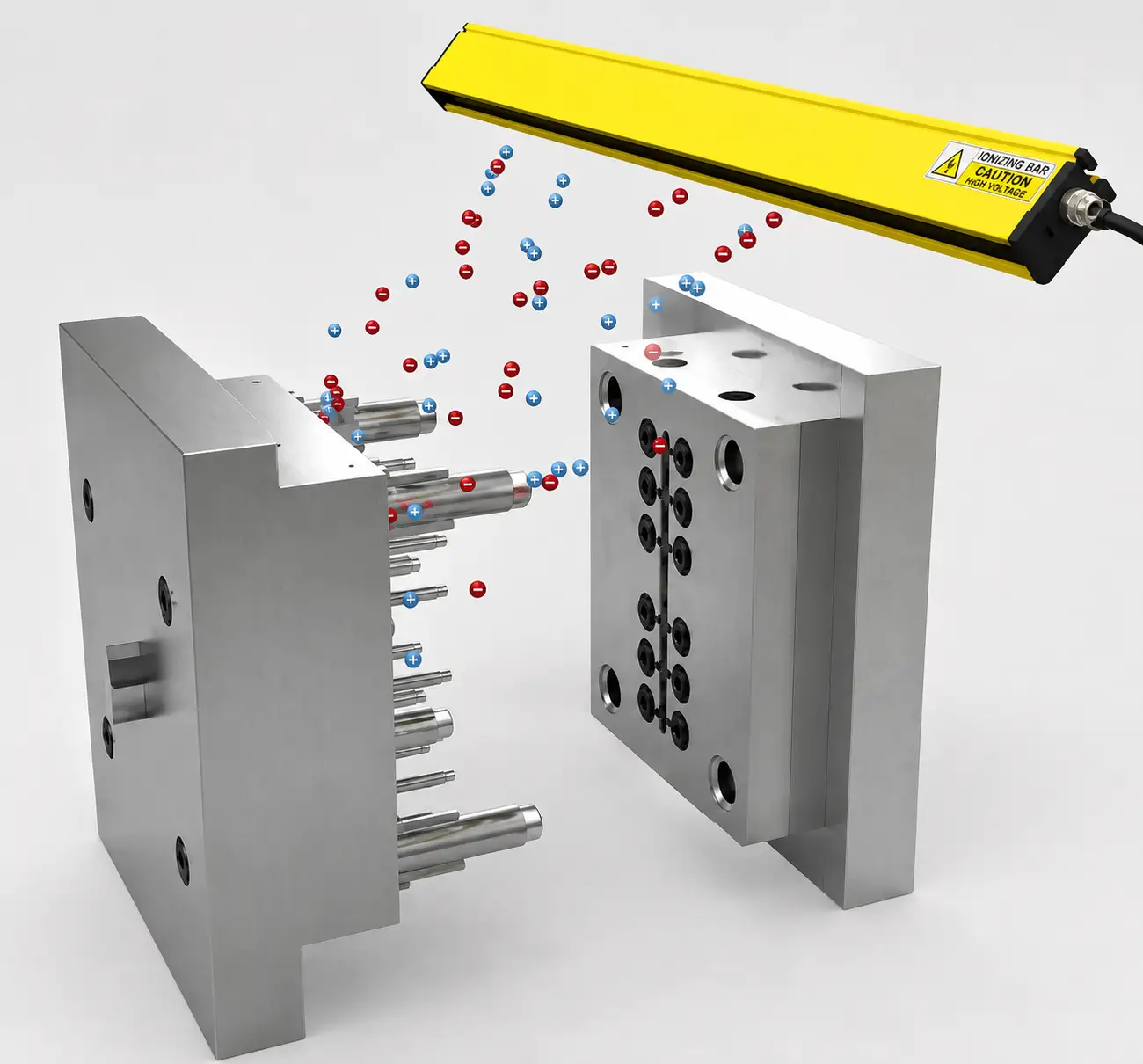
Injection Molding (Ejection and Mold Protection)

The Problem: High-speed injection molding of precision parts—whether for medical devices, pharmaceutical packaging, or chemical-resistant labware—creates intense friction and heat. This leads to massive static buildup on both the plastic part and the metallic mold surfaces. The resulting electrostatic attraction causes parts to stick to the mold cavity or core instead of ejecting cleanly. When the mold cycles for the next shot with a stuck part still inside, it causes severe mechanical damage to the expensive mold faces, creates crushed "short shots," and results in costly machine downtime.

The Solution: High-output ionizing air blowers or specialized ionizing nozzles are positioned to target the open mold face during the ejection cycle. By flooding the mold cavity with a balanced stream of positive and negative ions, the static bond is instantly neutralized. This allows the parts to release effortlessly and fall away cleanly, ensuring the mold is clear for the next cycle and preventing any physical damage to the tooling.

Application: Automatic part release and mold protection for high-volume injection molding of plastic components, chemical containers, medical syringes, and pharmaceutical vials.