Converting

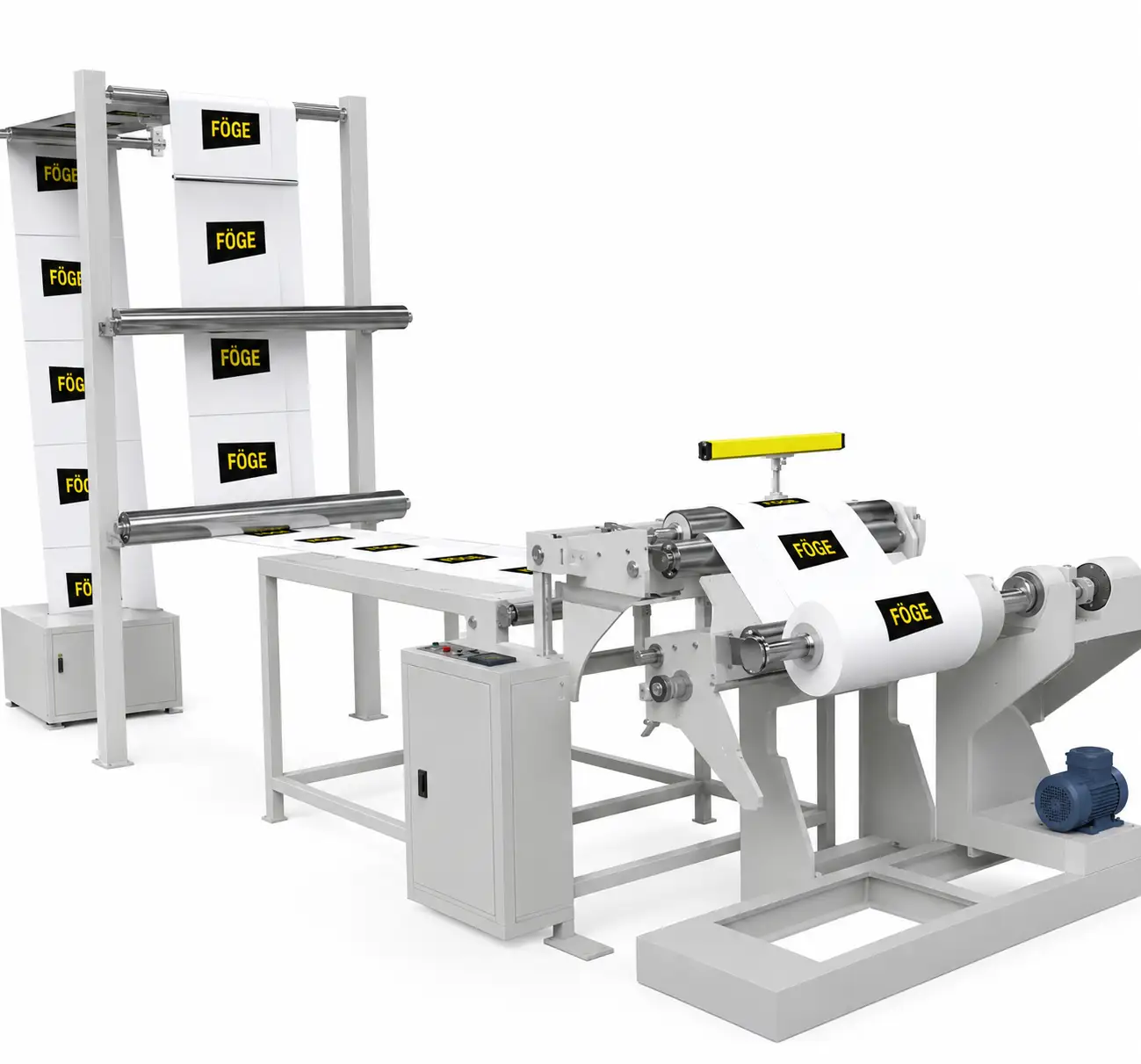
Film winding and rewinding station (double rod setup)
The Problem: As continuous plastic film travels at high speeds over machine rollers, friction generates a massive triboelectric static charge. If this charged film is wound up, the static electricity is trapped tightly within the layers of the roll. This "battery" effect can lead to severe electrostatic discharges (sparks) that can shock operators, ignite solvent vapors (fire hazard), and cause the film to attract dust or aggressively stick to itself when unwound by the end-user.
The Solution: A dual static elimination system is employed. Two active ionizing bars are positioned right at the final winding point. One bar faces the top surface of the incoming web, while the second bar faces the bottom surface (or directly at the winding roll). This dual action floods the area with positive and negative ions, ensuring total neutralization of both sides of the material just milliseconds before it is trapped in the roll.
Application: Winding and rewinding continuous webs of plastic film, paper, foils, or textiles into safe, static-free finished rolls.
High-Speed Web Handling / Converting Line
The Problem: As the plastic film web travels over machine rollers at high speeds, friction builds up severe static electricity. If this charged film is wound up, the static is trapped and amplified within the roll. This creates a highly charged finished product that intensely attracts dust, presents a painful shock hazard to operators, and creates a significant fire risk from electrostatic discharge (sparking) in the plant.
The Solution: Two active ionizing bars (static eliminators) are positioned over the web just before the final winding point. These bars shower the moving material with a dense cloud of positive and negative ions, safely neutralizing the static charge on the film before it is trapped in the finished roll.
Application: High-speed winding, slitting, and rewinding of continuous plastic film, paper, or textile webs into safe, static-free rolls.


High-Speed Web Handling / Converting Line
The Problem: As continuous webs of plastic film, paper, or foil travel at high speeds through machine rollers, intense friction generates severe static electricity on both sides of the material. This high charge can cause the web to wander off-track, strongly attract airborne dust (ruining coatings or prints), and present a significant electrical shock hazard to operators working near the line.
The Solution:A dual-sided static elimination setup is deployed. Two active ionizing bars are positioned on opposite sides of the moving web. By flooding both the top and bottom surfaces with positive and negative ions simultaneously, the system ensures complete neutralization of the web, even at high speeds or with highly insulative materials
Application: Total static neutralization for continuous webs during high-speed printing, coating, laminating, or general roll-to-roll converting operations.
Bag Making Machine (Stacking / Delivery Section)
The Problem: As the plastic film is drawn through the machine, folded, heat-sealed, and cut into individual bags, intense friction and separation processes generate severe triboelectric static charges. When these highly charged bags are ejected into the stacking area, they behave erratically: they cling to machine frames causing jams, repel each other (flying off the stack), or stick tightly together, making them difficult for operators or end-users to open.
The Solution: An active ionizing bar is installed directly over the final ejection point or stacking table. It blankets the delivery area with a dense field of positive and negative ions, instantly neutralizing the static charge on each bag as it drops. This removes the electrostatic forces, allowing the bags to fall naturally and form a clean, uniform, and manageable stack.
Application: Automated high-speed production, cutting, and organized stacking of flexible plastic bags, sacks, or pouches.

Blown Film Extrusion Line (Take-off / Collapsing Section)
The Problem: In blown film extrusion, molten plastic is blown into a massive bubble, stretched, cooled, and then pulled through a collapsing frame and tight nip rollers. This extreme process generates massive levels of static electricity—often high enough to be physically dangerous to operators. This extreme charge causes the film to cling aggressively to the collapsing boards (causing wrinkles or scratches), powerfully attract airborne dust, and create severe winding issues downstream.
The Solution: Because the initial charge is so extreme, a "hybrid" two-stage system is required. First, a passive static brush (or tinsel) is installed to safely bleed off the massive bulk charge down to a manageable level. Immediately following it, an active ionizing bar is positioned to neutralize the remaining residual charge down to zero, ensuring the film is perfectly neutral before it proceeds down the tower.
Application: Safely neutralizing the extremely high, dangerous static charges generated during the high-stress extrusion, cooling, and collapsing phases of blown plastic film manufacturing.
Film Winder (Long-Distance Neutralization)
The Problem: As continuous plastic film is wound into a roll, friction from the web travel generates significant static electricity. If not neutralized, this charge is trapped tightly within the layers of the finished roll, creating a powerful "battery" effect that attracts dust, poses a painful shock hazard to operators, and increases the risk of electrostatic discharge (sparking).
The Solution: A single, high-powered long-distance ionizing bar is strategically mounted facing the exact area where the incoming film combines with the winding roll (the winding nip). This specialized bar projects a powerful cloud of positive and negative ions over a longer distance, effectively neutralizing the static on both the moving web and the surface of the roll simultaneously before the charge can be trapped inside.
Application: Winding continuous plastic film webs into finished rolls using a simplified, long-range static elimination setup.

Cross-Cutting / Sheeting Machine (Web to Sheet)
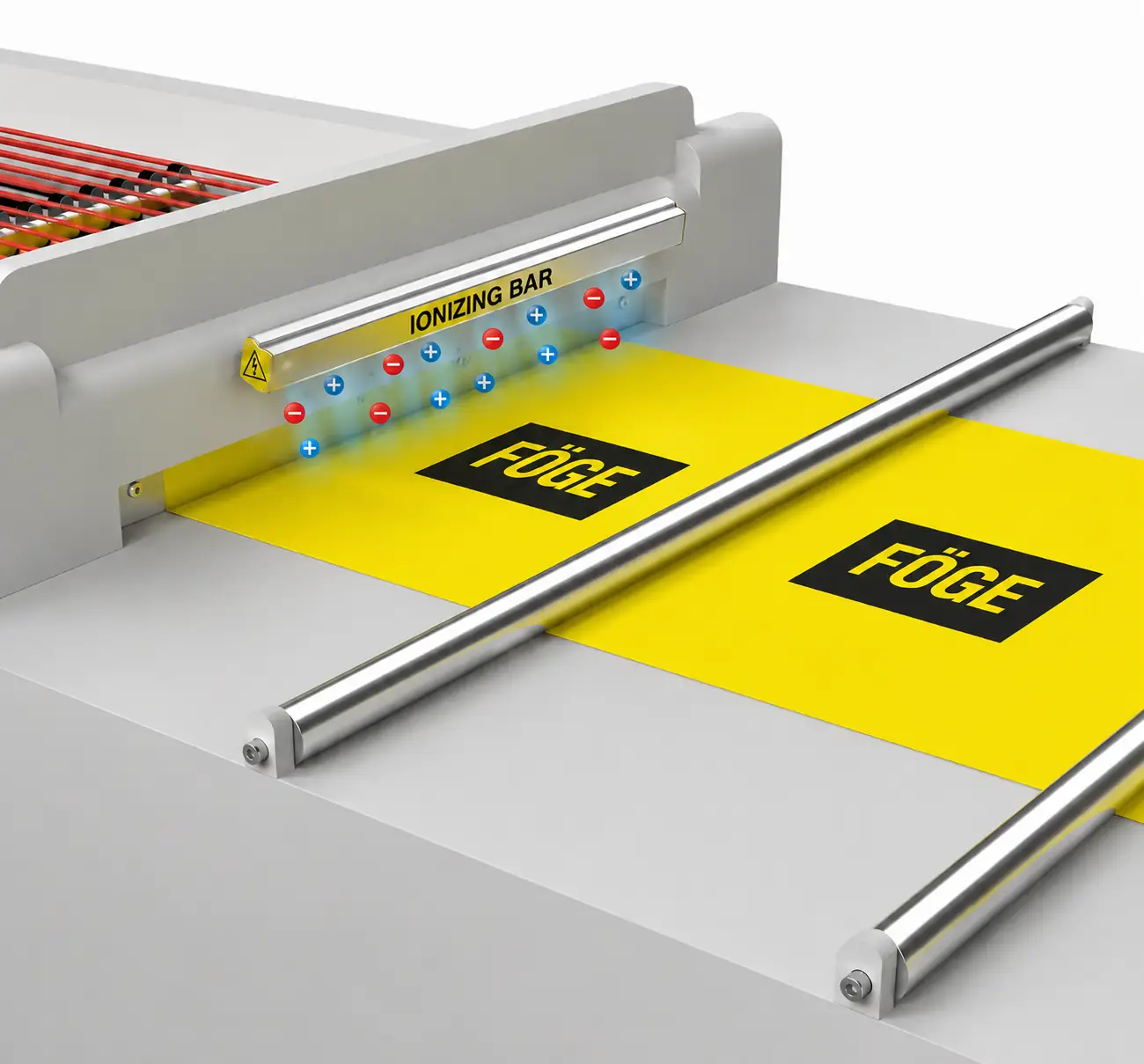
The Problem: Friction from the feed rollers generates high static charge on the continuous film. This static causes the film to aggressively stick to the feed rolls and the cutting blade itself, leading to severe misfeeds, blade jams, and inaccurate cut lengths. Furthermore, the shearing action of the cut generates additional static, causing the newly separated sheets to cling to the exit conveyor, fly around, or stick together instead of stacking properly.
The Solution: A strategic three-bar static elimination system is deployed. Before the blade, two active ionizing bars (one on top, one on the bottom) neutralize the incoming continuous web, ensuring it feeds perfectly flat and releases cleanly from the cutting mechanism. After the blade, a third ionizing bar neutralizes the individual cut sheets as they exit, removing any new charge generated by the cut and allowing the pieces to convey and stack neatly.
Application: High-speed cross-cutting, sheeting, or guillotine cutting of continuous plastic film, paper, or foil webs into individual sheets.