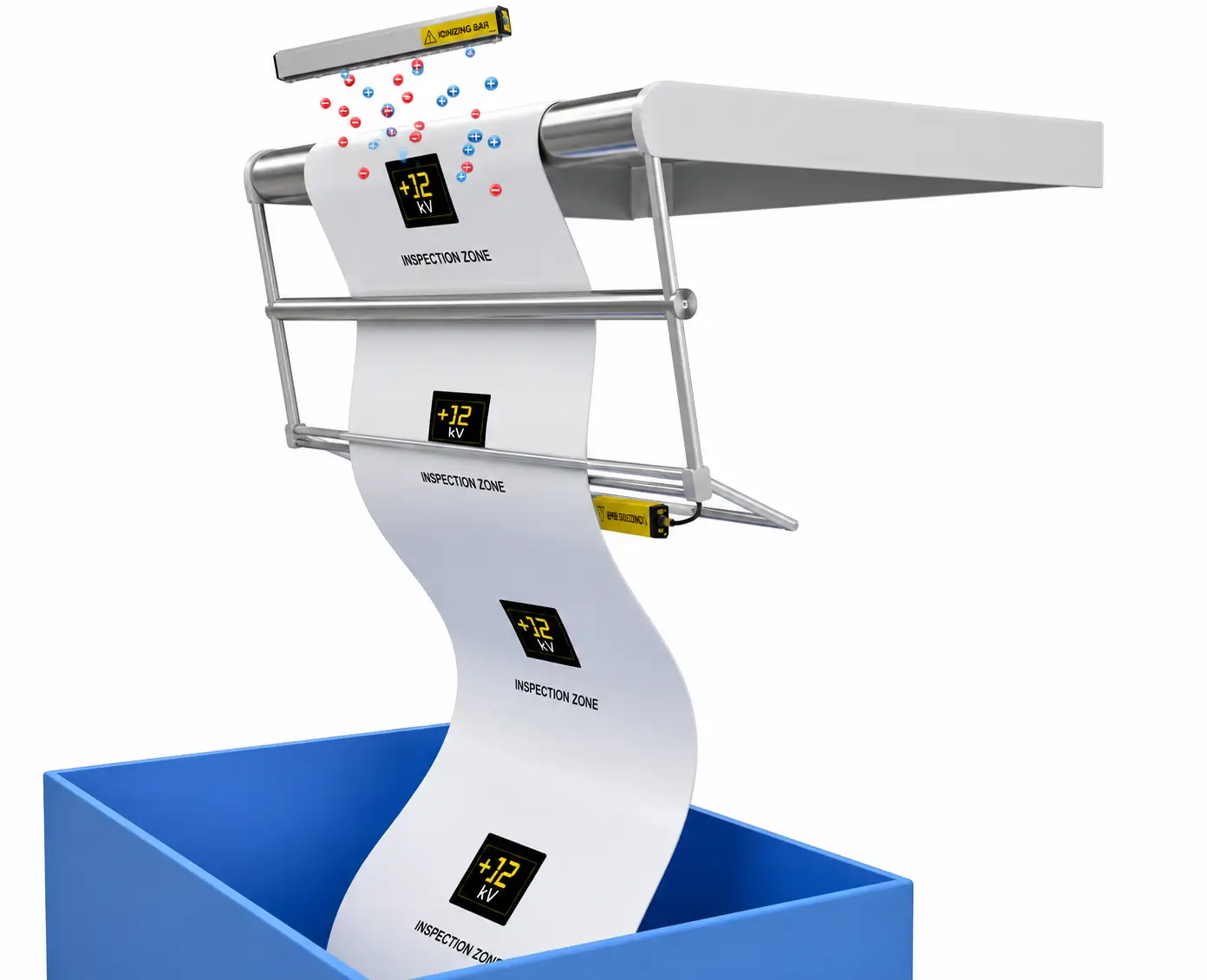
The Problem: In textile manufacturing, thousands of individual synthetic yarns (polyester, nylon, acrylic) are pulled at very high speeds from a creel to be wound onto a large beam. This rapid movement and friction against thread guides generate intense static electricity. The charged yarns repel each other (causing "ballooning"), stick to machine rollers, or snap. This leads to uneven tension, tangling, and frequent machine stops. Furthermore, the massive static buildup in the finished beam can cause painful shocks to operators and attract significant amounts of dust and lint, degrading fabric quality.
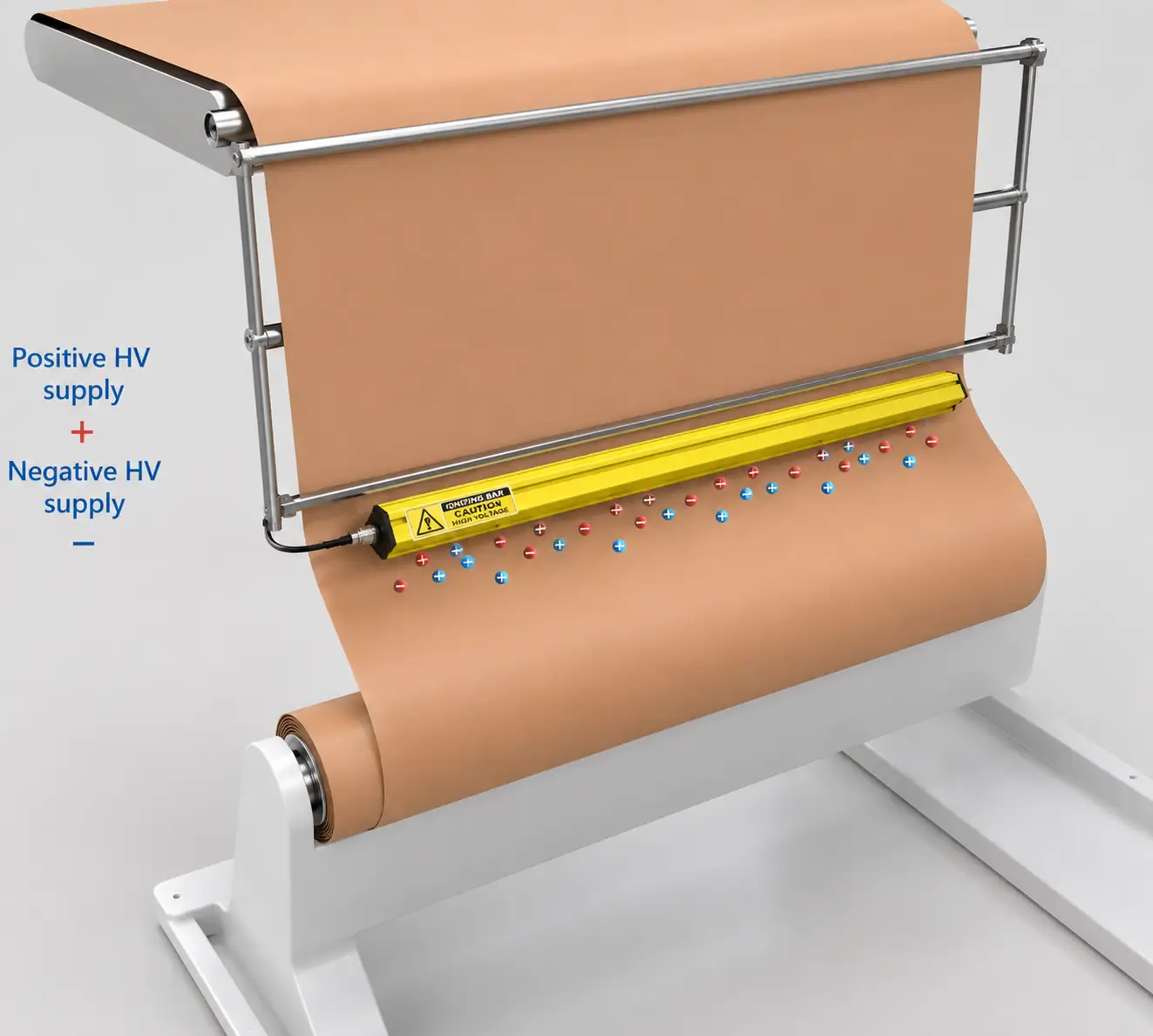
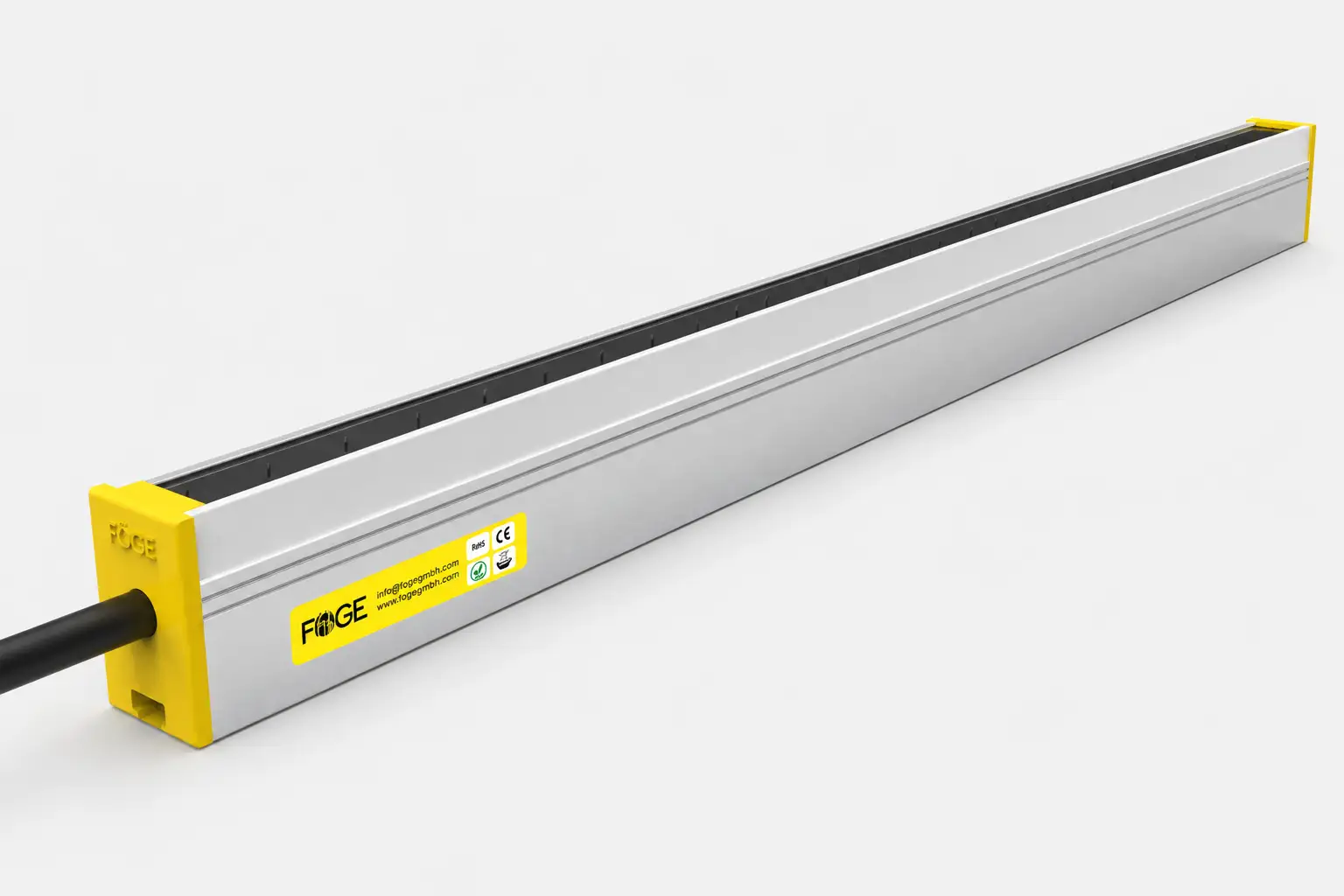
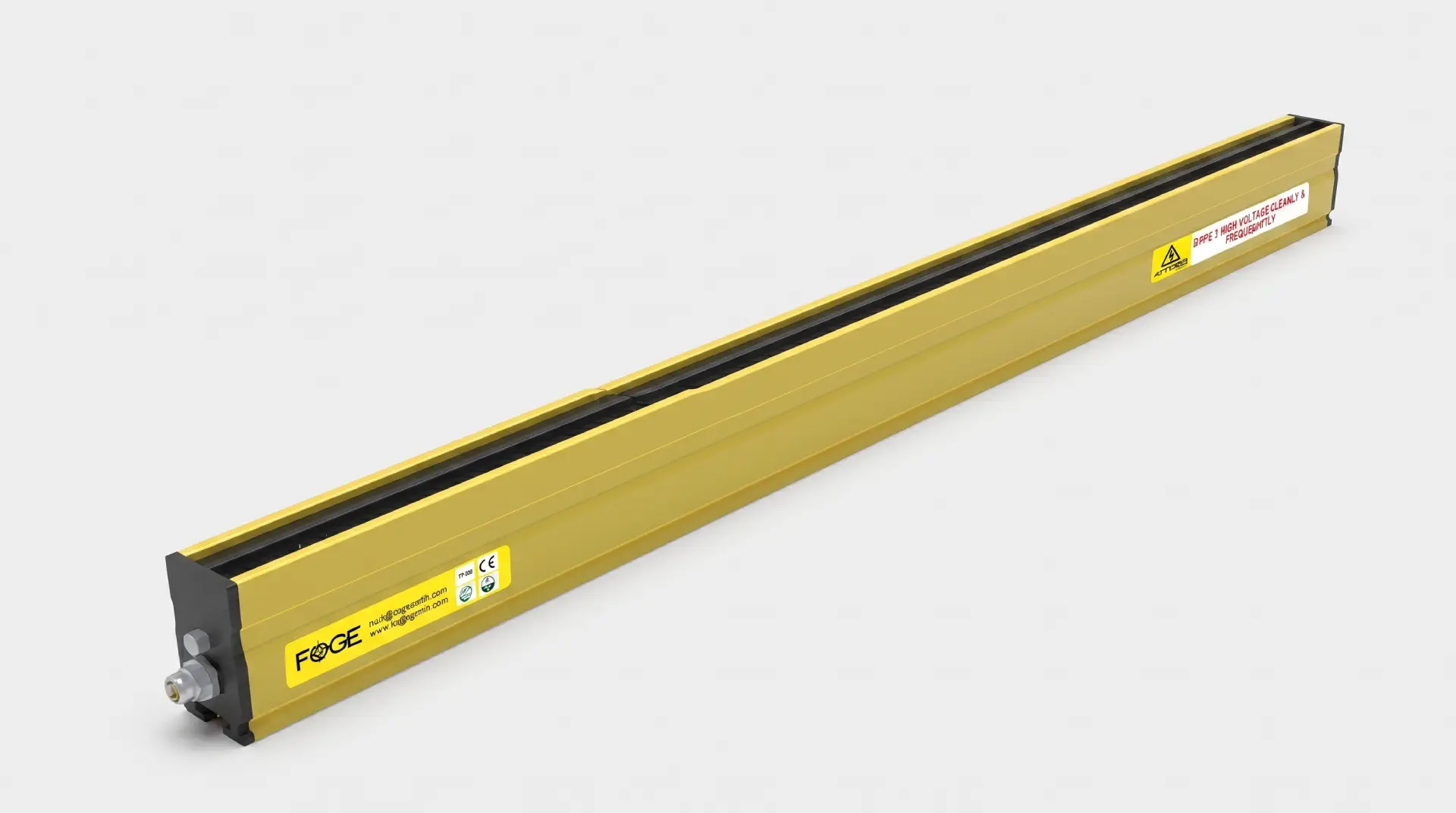
The Solution: An active ionizing bar is installed across the entire width of the yarn sheet, just before it is wound onto the beam. By flooding the moving threads with positive and negative ions, the static charge is neutralized instantly. This ensures the yarns remain parallel and under uniform tension, allowing for a dense, high-quality beam and preventing operator shocks during handling.
Application: High-speed warping, beaming, and sizing processes in the production of synthetic and blended textiles.