Whitegoods
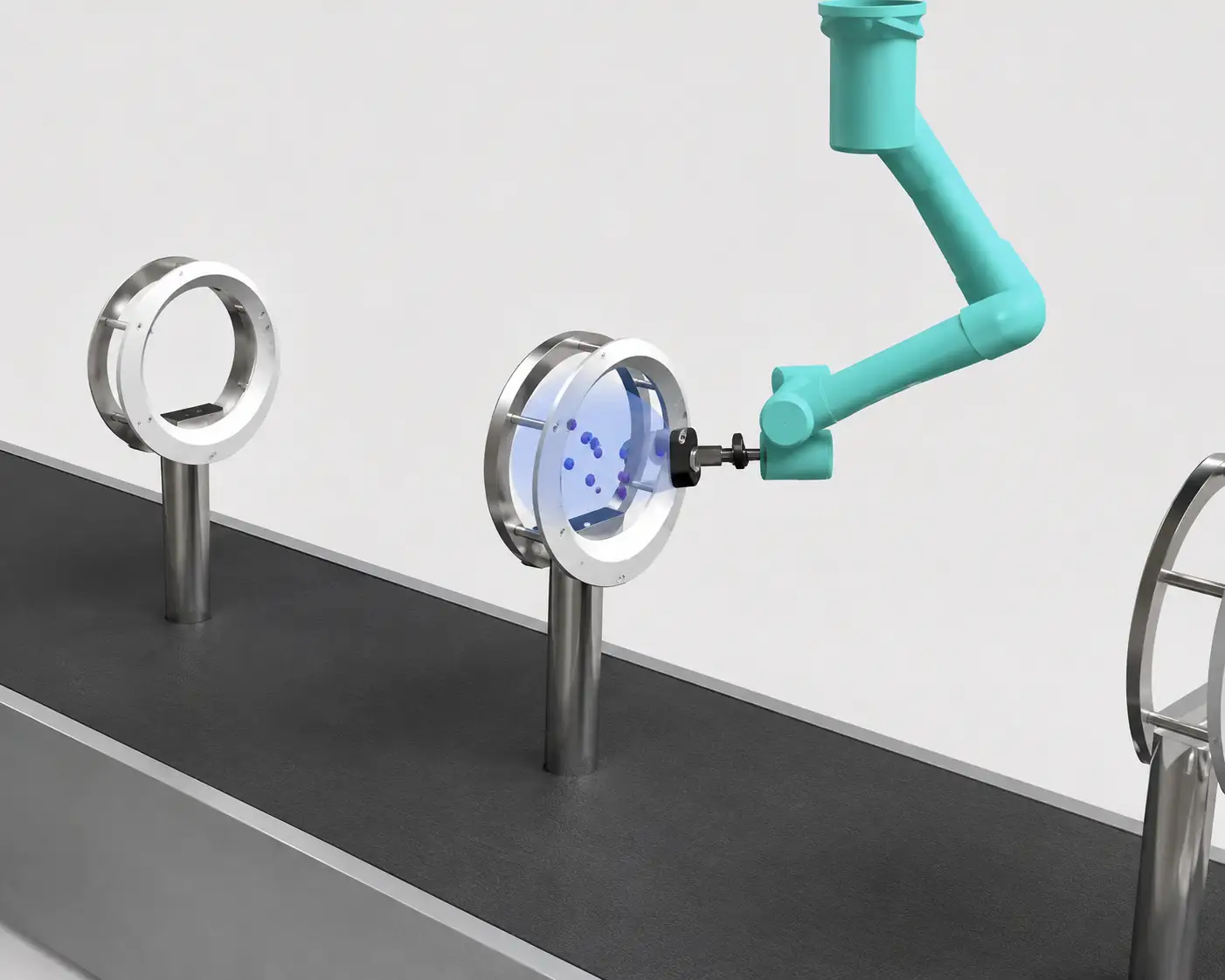
Automated Washing Machine Door Assembly / Robot Cleaning Station
The Problem: Washing machine doors, typically made of high-gloss plastic or glass, are highly prone to static buildup during the molding and transport phases. On an automated assembly line, this static acts as a powerful magnet for dust, lint, and airborne debris. If these contaminants are not removed before the door is assembled or packaged, it leads to visible surface defects and perceived poor quality. Standard robotic handling doesn't solve this, as the static bond holds the dust firmly to the surface, making it resistant to simple air blowing.
The Solution: A robotic arm equipped with an ionizing air nozzle or specialized static-eliminating cleaning head targets the interior and exterior surfaces of the door. As the robot follows the precise contour of the part, it delivers a concentrated stream of ionized air that breaks the electrostatic bond holding the dust. This allows the particles to be effectively swept away, leaving the door perfectly clean and statically neutral for the next assembly step.
Application: Precision robotic cleaning and static neutralization of complex 3D plastic and glass parts in the home appliance and automotive industries.
Flat Panel TV / Monitor Assembly Station
The Problem: During the assembly of flat-panel displays, peeling protective liners or simply handling the large glass and plastic polarizing layers generates immense static electricity. This static acts like a powerful magnet, instantly attracting airborne dust, lint, and micro-particles to the screen's surface. If these contaminants are not completely removed before the final frame or outer screen is sealed, they become permanently trapped inside. This results in highly visible optical defects (often looking like "dead pixels"), expensive rejected units, and poor overall picture quality. Standard compressed air alone is ineffective because it cannot break the strong electrostatic bond holding the dust to the screen.
The Solution: The operator uses a handheld ionizing air gun. This precision tool delivers a targeted stream of high-pressure compressed air infused with positive and negative ions. The ions immediately break the stubborn static bond holding the dust to the sensitive screen, while the air blast safely and forcefully sweeps the unbonded contaminants away. This leaves the display surface perfectly clean and statically neutral for the next stage of assembly.
Application: Precision manual cleaning, dust removal, and static neutralization of large, sensitive flat panel displays (televisions, monitors, touchscreens) during critical assembly, inspection, and sealing phases.

Injection Molding (Ejection and Mold Protection)
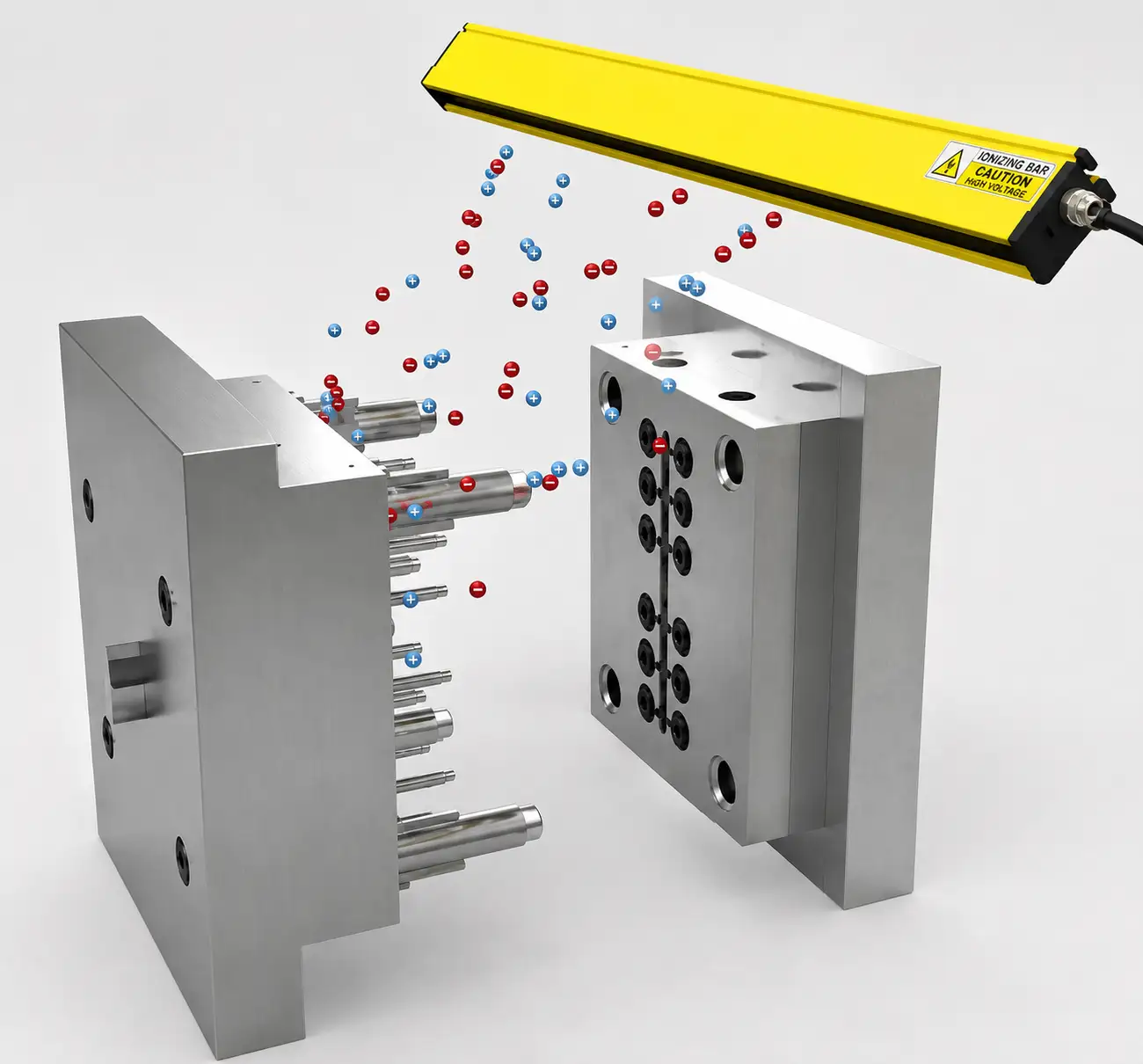
The Problem: High-speed injection molding of precision parts—whether for medical devices, pharmaceutical packaging, or chemical-resistant labware—creates intense friction and heat. This leads to massive static buildup on both the plastic part and the metallic mold surfaces. The resulting electrostatic attraction causes parts to stick to the mold cavity or core instead of ejecting cleanly. When the mold cycles for the next shot with a stuck part still inside, it causes severe mechanical damage to the expensive mold faces, creates crushed "short shots," and results in costly machine downtime.
The Solution: High-output ionizing air blowers or specialized ionizing nozzles are positioned to target the open mold face during the ejection cycle. By flooding the mold cavity with a balanced stream of positive and negative ions, the static bond is instantly neutralized. This allows the parts to release effortlessly and fall away cleanly, ensuring the mold is clear for the next cycle and preventing any physical damage to the tooling.
Application: Automatic part release and mold protection for high-volume injection molding of plastic components, chemical containers, medical syringes, and pharmaceutical vials.
Medical Injection Molding (Collection & Sorting)
The Problem: As medical-grade plastic parts are ejected from the mold and slide down collection chutes into bins, the intense friction generates high levels of static electricity. This creates three critical issues:
- Contamination: The charged parts act as "magnets" for airborne dust and fibers, which is unacceptable in sterile medical environments.
- Handling Issues: Parts cling to the metal chutes or stick to each other in the bins, preventing automated counting or sorting.
- Operator Safety: Operators touching the collection bins or the parts themselves receive painful electrostatic shocks throughout the day.
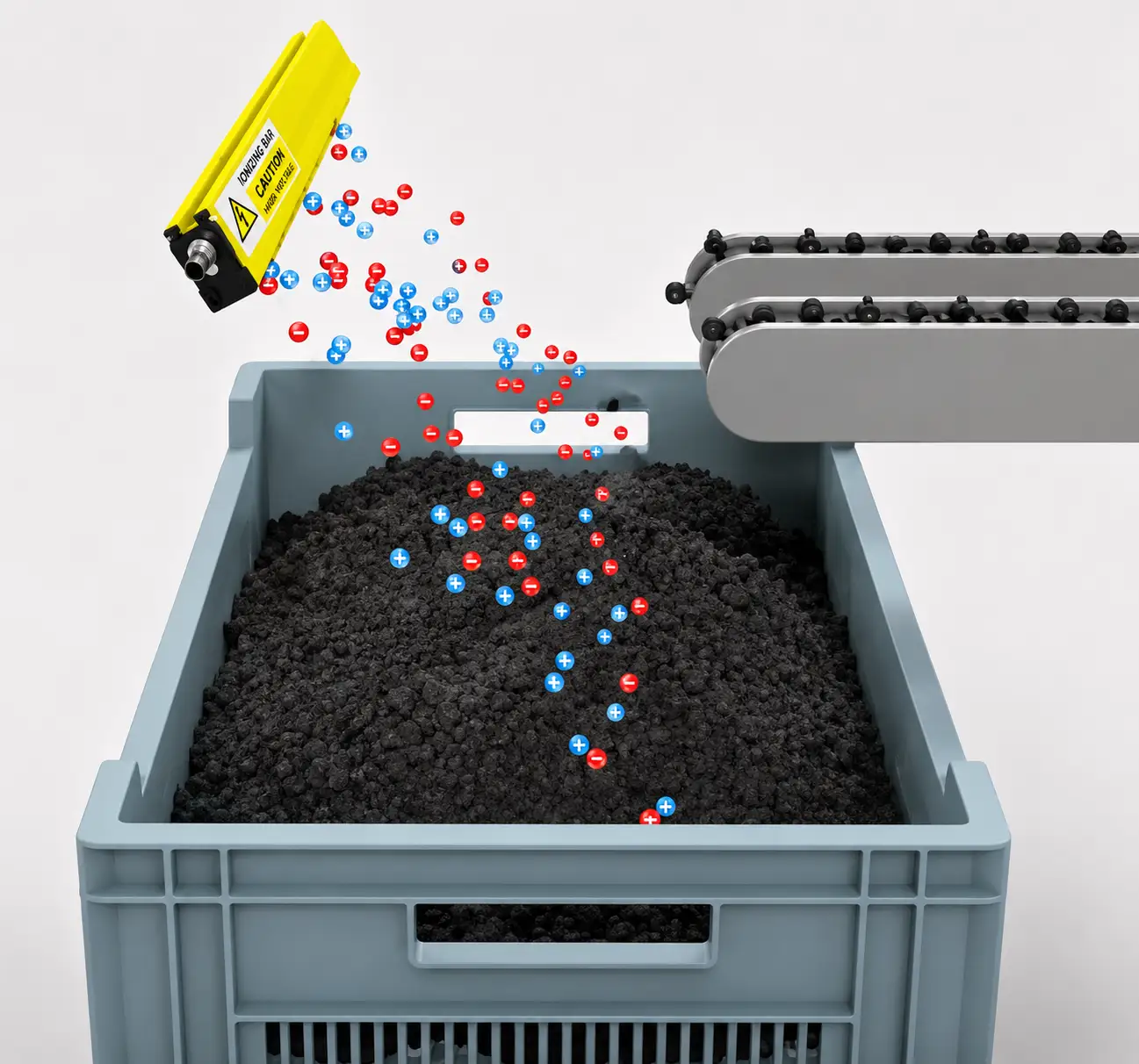
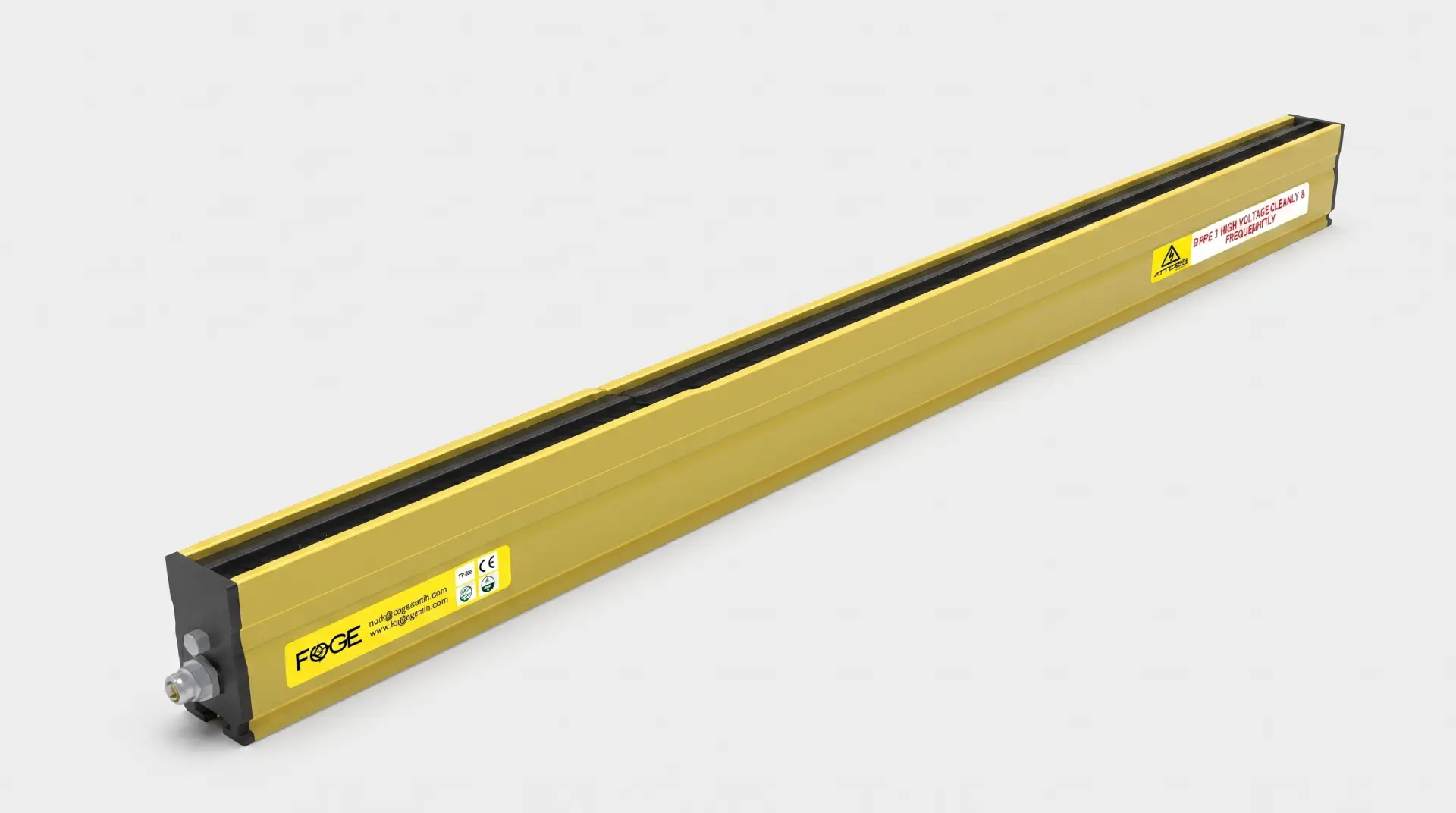
The Solution: An active ionizing bar is mounted directly over the conveyor or discharge chute. By flooding the parts with a balanced stream of positive and negative ions as they exit the machine, the static charge is neutralized instantly. This ensures the parts fall cleanly into the bins, remain free of dust, and are safe for operators to handle without the risk of shocks.
Application: Cleanroom injection molding for medical components such as petri dishes, syringe barrels, test tubes, and IV connectors.