Packaging

In Mould Labeling Application
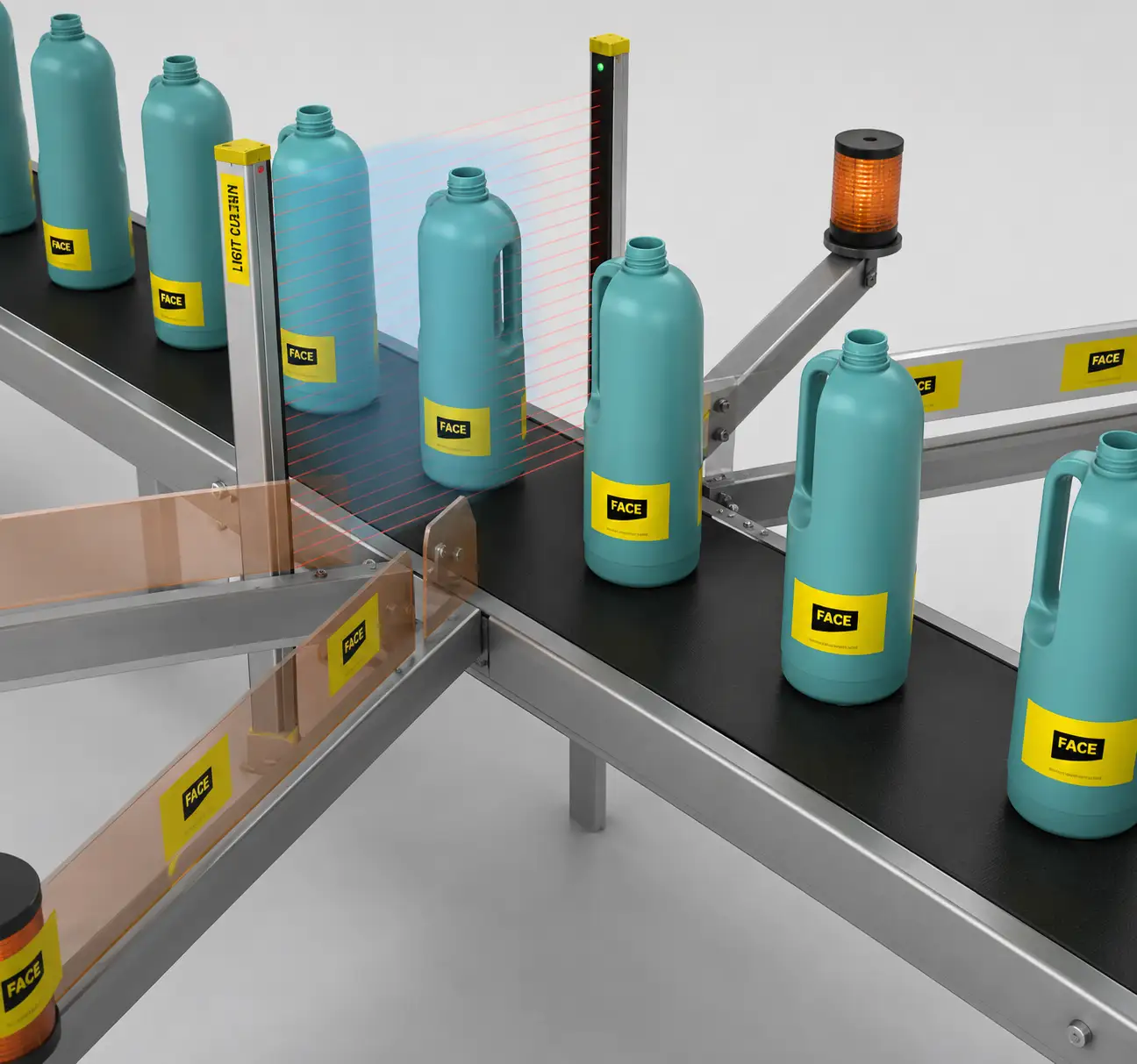
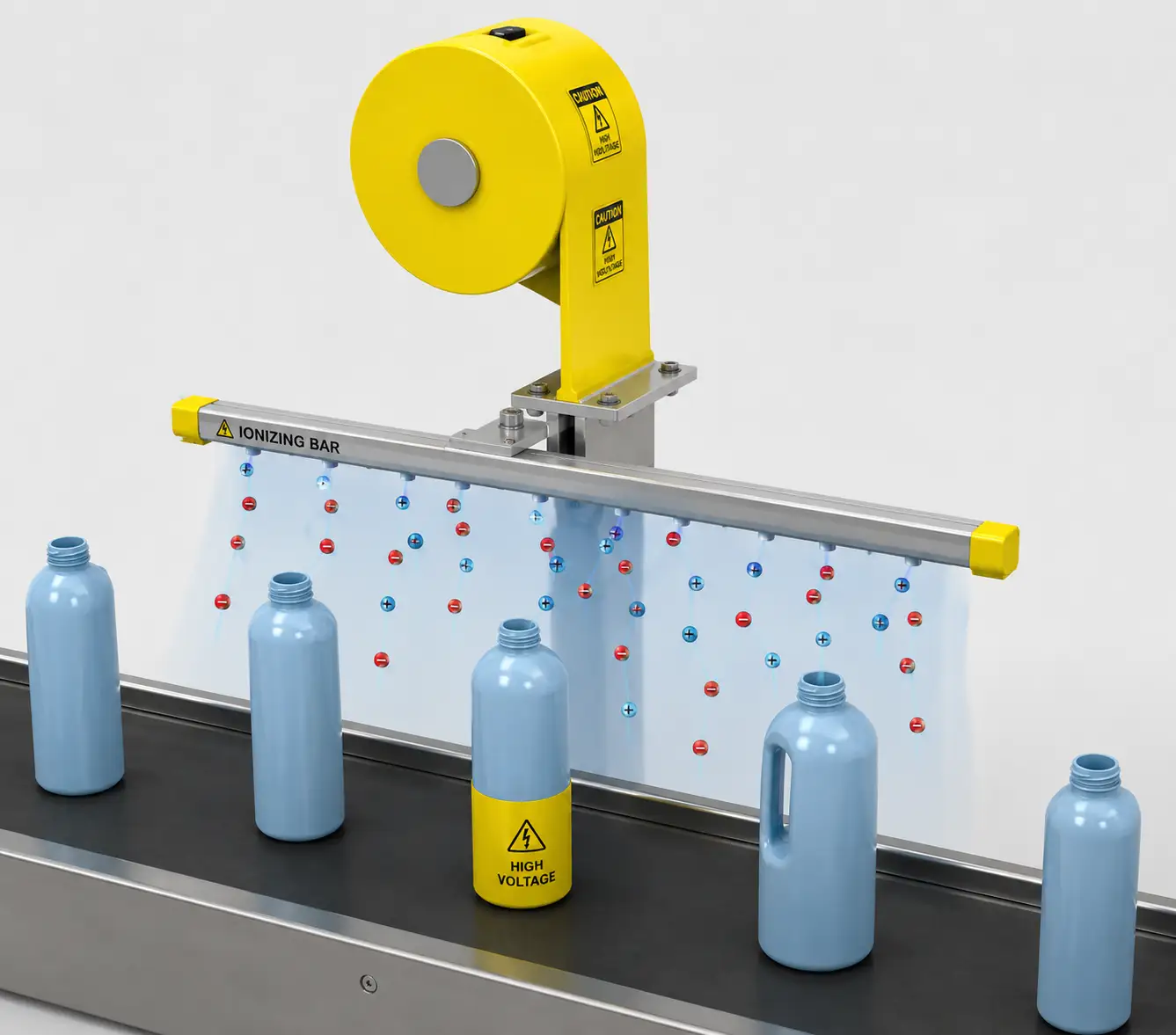
The Problem: Plastic containers generate significant static charges during the molding, stacking, and unstacking (de-nesting) processes. As shown by the warning icons in the image, this high static charge acts like a magnet, attracting airborne dust and contaminants into the open containers before they can be filled. It also presents a painful electrical shock hazard to operators handling the stacks.
The Solution: Overhead active ionizing bars generate a continuous shower of positive and negative ions. This neutralizes the containers as they pass underneath, preventing dust attraction, releasing any existing dust (often combined with an air blower to remove it), and eliminating the shock hazard.
Application: Transporting, separating (de-nesting), or stacking empty plastic containers, tubs, or trays on a packaging or filling line.
Inkjet Coding / Marking Conveyor Line
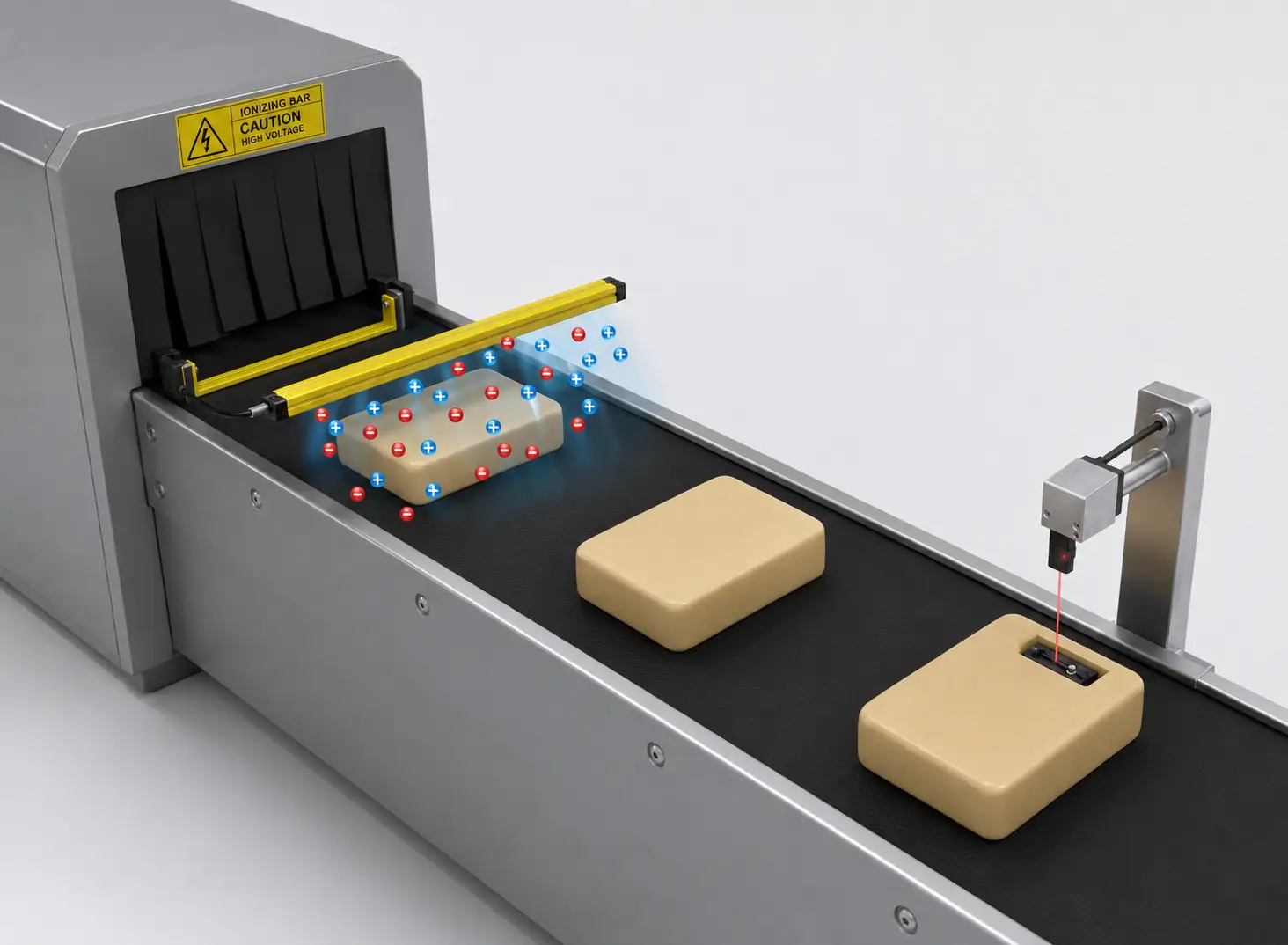
The Problem: Plastic parts or packaging often accumulate high static charges from previous manufacturing steps (like molding) or simply from friction as they move along the conveyor belt. When a charged object passes under an inkjet print head, the static field repels or scatters the microscopically small ink droplets. This causes "spider-webbing" (ink spray), blurry text, distorted barcodes, and ultimately, unreadable product codes.
The Solution: An active ionizing bar is mounted immediately upstream of the print head. It floods the surface of the product with a neutralizing ion cloud, eliminating the static field just before printing. This ensures the ink droplets travel in a straight, precise line to the target, resulting in sharp, high-quality prints.
Application: High-speed inkjet printing of barcodes, QR codes, expiration dates, or lot numbers onto individual products, lids, or packaging.
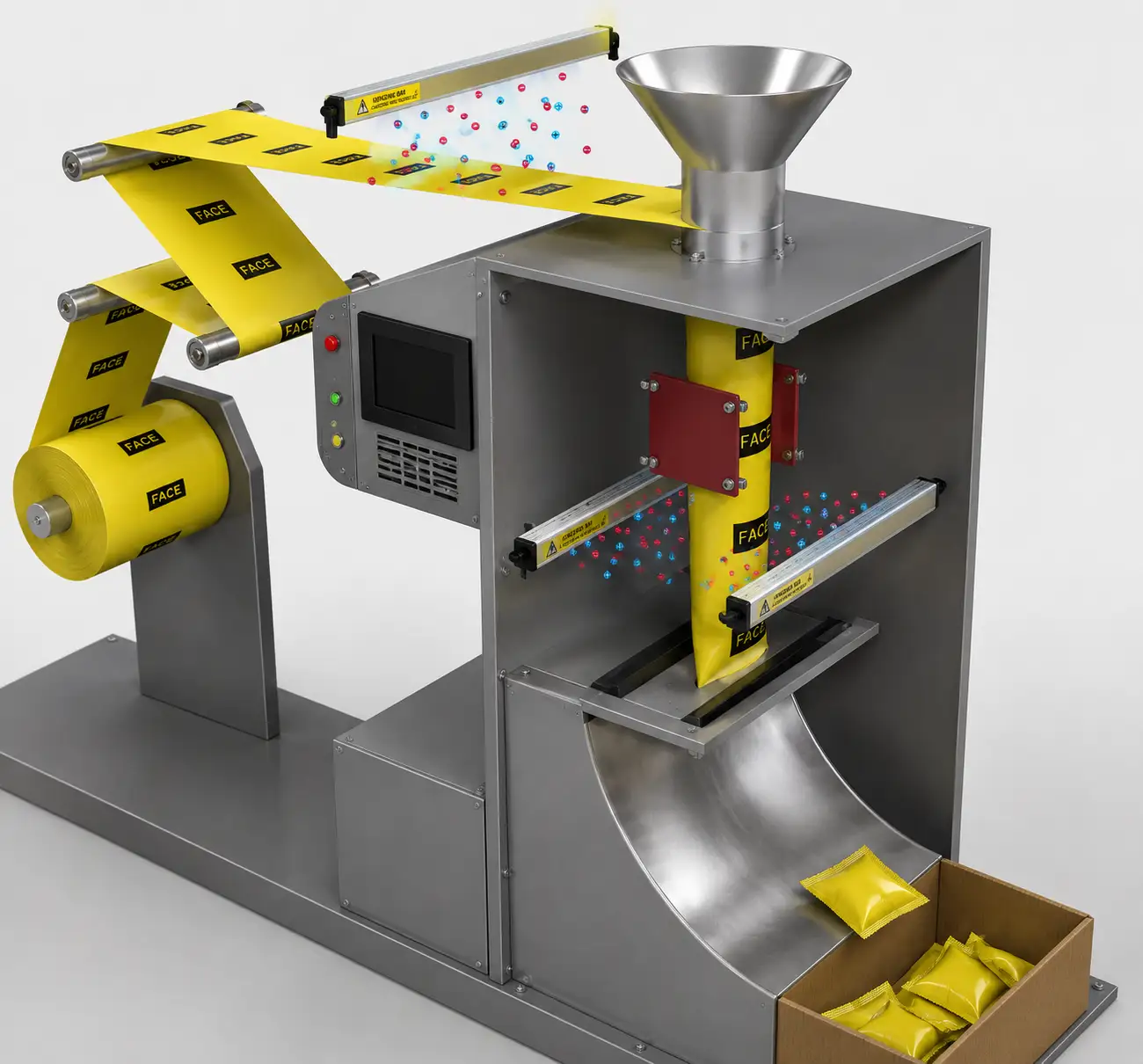
Vertical Form Fill Seal (VFFS) Machine / Vertical Bagging Machine
The Problem: As the plastic film web unwinds and travels over rollers, it generates a high triboelectric charge. This static creates two major production bottlenecks: First, the charged film can cling to the metal forming collar, causing misfeeds and jams. Second, and most critically, static on the inside of the formed tube causes dusty, powdery, or lightweight products to fly up and adhere to the film exactly where the sealing jaws need to close. This "seal contamination" results in weak seals, leaky bags, and rejected products.
The Solution: A multi-point static control approach is used. An ionizing bar neutralizes the flat web before it reaches the forming collar to ensure smooth feeding. Additional ionizing bars are strategically placed just below the sealing jaws to bathe the film tube in ions, neutralizing the static charge so the product drops cleanly to the bottom of the bag without clinging to the seal area.
Application: Automatically forming, filling (with loose solids, powders, or liquids), and sealing flexible packaging bags in high-speed production lines.
Roll-Fed Wrap-Around Labeling Machine
The Problem: The processes of unwinding and rapid cutting generate significant triboelectric (friction-induced) static charge on the thin plastic labels. Highly charged labels will cling to machine parts, repel each other, or misalign when transferred to the container.
The Solution: The visual representation of the blue field with red and blue spheres is an ion cloud. The bars emit both positive and negative ions to completely neutralize the static charge on the cut label as it passes through.
Application: Once neutralized, the label can be accurately controlled (often via vacuum belts or transfer drums, which are not pictured here for simplicity) and wrapped around the circumference of the moving plastic bottles.
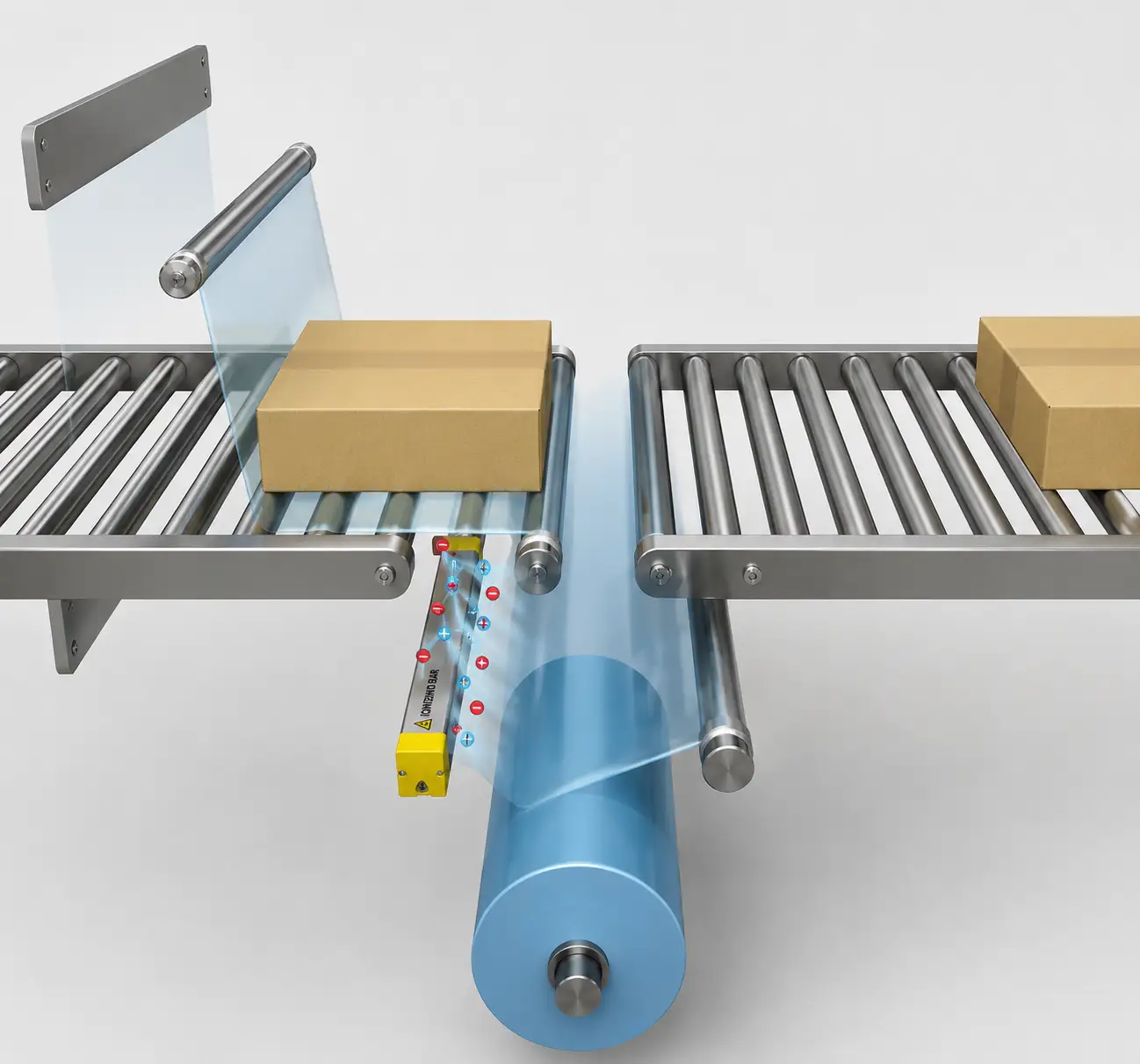
Sleeve Wrapper / Shrink Bundling Machine
The Problem: As the continuous web of plastic shrink film unwinds and feeds upward through the machine gap, it generates static electricity. This static charge causes the lightweight film to wrap around machine rollers, cling to itself, or feed unevenly, resulting in machine jams and poorly wrapped products.
The Solution: An active ionizing bar is positioned right next to the film web just before it meets the product box. It neutralizes the static charge, allowing the film to feed smoothly and drape accurately around the product without clinging to the machinery.
Application: Automatically wrapping individual boxes, trays, or bundled products in plastic film (often before they pass through a heat shrink tunnel).
Front and Back Labeling Machine (Double-Sided Labeler)
The Problem: Plastic bottles build up significant static electricity as they move and rub against the conveyor belt and guide rails. This static charge creates two main issues: it attracts airborne dust to the bottle surface (causing bubbles or poor label adhesion), and it can prematurely attract or repel the incoming label, resulting in skewed, wrinkled, or misplaced labels.
The Solution: A vertical active ionizing bar is mounted alongside the conveyor just before the label application point. As the bottles pass through the emitted ion field, their surface charge is neutralized, allowing for precise, flat, and accurate label placement.
Application: Automatically applying pressure-sensitive labels to one or both sides of plastic bottles or containers as they move along a high-speed conveyor.