Static Discharges Brush
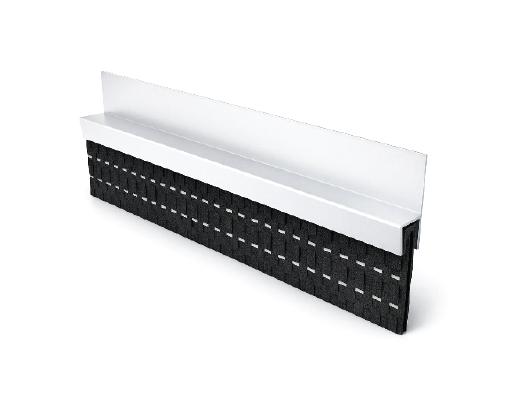
Static Discharges Brush
• The fine conductive tips of the fibre concentrate the
electric field to cread ionised air which allows the
static charge to flow to earth
• Static discharges are often called 'passive' static eliminators,
but this does not mean that they are weak. They are
particularly efficient at neutralising high charge levels.
• They also cope well with high speeds.
electric field to cread ionised air which allows the
static charge to flow to earth
• Static discharges are often called 'passive' static eliminators,
but this does not mean that they are weak. They are
particularly efficient at neutralising high charge levels.
• They also cope well with high speeds.
Technical Information
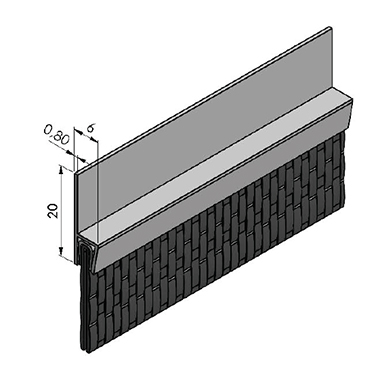
Drawing / Dimensions
How it works
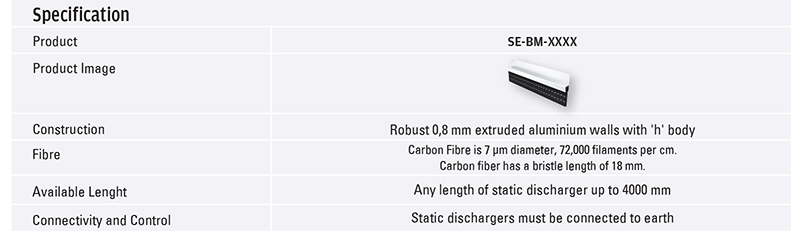
The 'brushes' have a large number of highly conductive fibres. The fine tips of the fibres concentrate the electric field of the
static charge and ionise the air. This ionised air provides ions of the opposite polarity neutralise the static charge and allow it to
flow to earth through the brush body. The tips of the fibre do not need to touch the material to be neutralised, normally they are
positioned 2-3 mm from it. The body of the static discharger must be connected to an earth/ground.
static charge and ionise the air. This ionised air provides ions of the opposite polarity neutralise the static charge and allow it to
flow to earth through the brush body. The tips of the fibre do not need to touch the material to be neutralised, normally they are
positioned 2-3 mm from it. The body of the static discharger must be connected to an earth/ground.
Applications
A wide variety of web and sheet applications.
The tips of the fibre do not need to touch the material
but need to be 2-3 mm from it.
The tips of the fibre do not need to touch the material
but need to be 2-3 mm from it.